Outdoor Patio Ideas That Feel Like a Real Room
The best patios read like rooms: anchored with a rug, defined by seating, lit for after dark, and styled with a palette that connects to the house. Patios that feel temporary usually just skipped those basics. Most usable residential patios run 120 to 300 square feet — enough for a conversation grouping (sofa or loveseat plus two chairs around a coffee table) or a six-person dining set, but usually not both without separating the zones. Materials should match the climate: teak, white oak, and powder-coated aluminum hold up to sun and rain across every US zone; wicker-look polyethylene handles most conditions; natural wicker and untreated woods do not. An outdoor rug (polypropylene or PET) anchors the seating zone and absorbs the leaf drift that would otherwise make the floor read uneven. Overhead lighting transforms the space after dark — string lights hung 8 to 10 feet up from a cafe-style zig-zag, a waterproof pendant over the dining table, or integrated LED path lighting for the edges. Pull one or two colors from the adjacent indoor room so the transition feels intentional.
Anchor the floor, define a seating zone, add overhead or string lighting, and repeat one or two colors from the nearest interior room so the transition feels intentional.
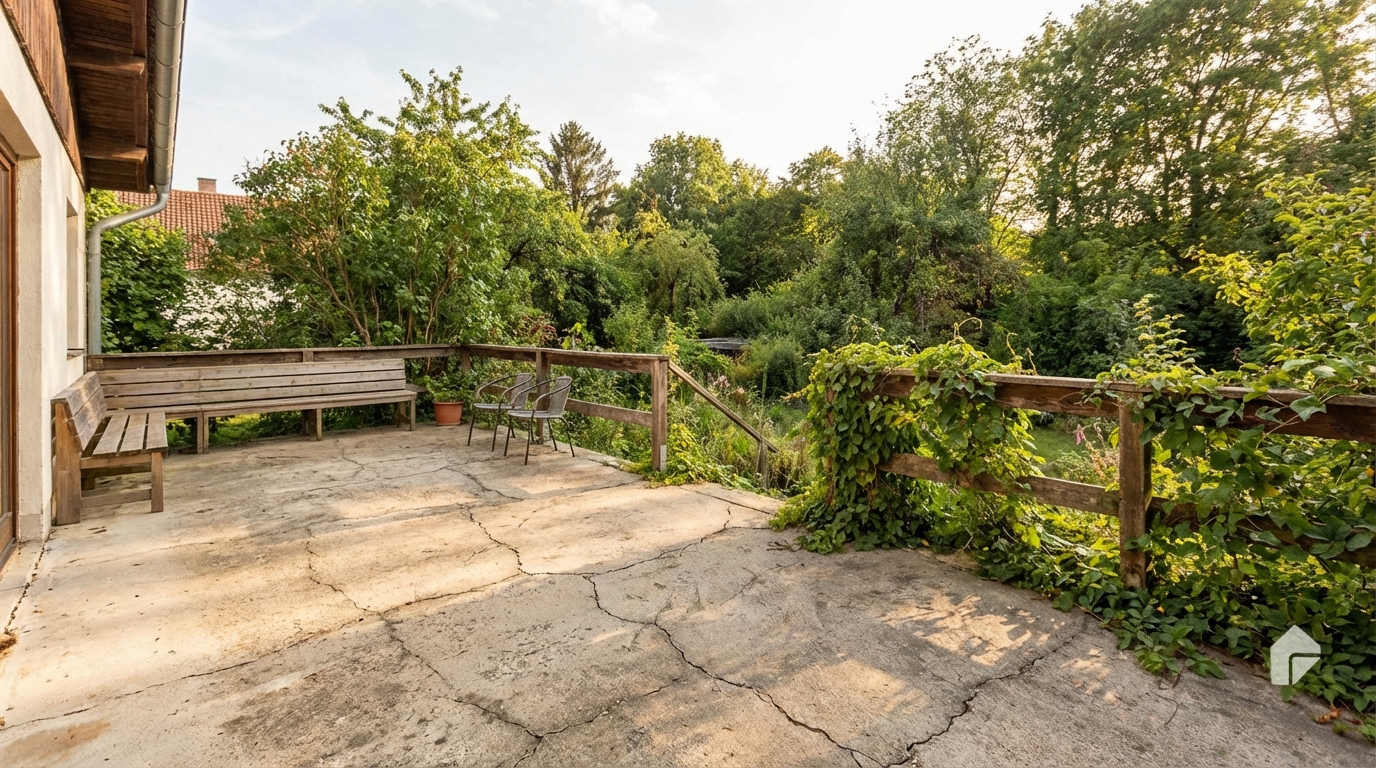
Key elements of a well-designed outdoor patio
- Outdoor rug
- Defined seating zone
- Overhead or string lights
- Indoor-outdoor palette link
- Planting as soft edge
- Weather-grade materials
Most common outdoor patio mistakes
- Furniture drifting without a rug to anchor it
- No lighting past sunset
- Palette unrelated to the interior
- Materials that do not survive the climate
Outdoor Patio ideas by style
Pick the direction that fits before narrowing into a single design.
Modern · outdoor patio
See all modern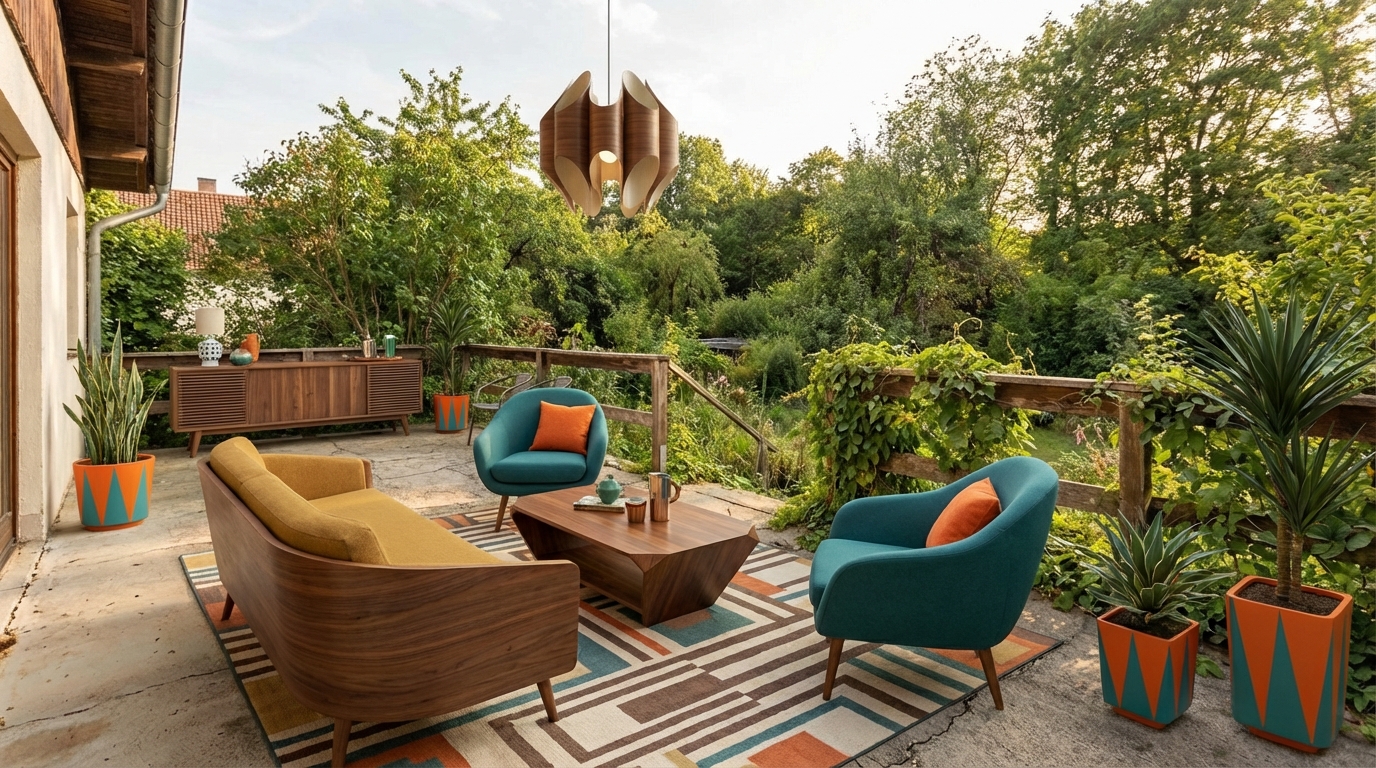
Minimalist · outdoor patio
See all minimalist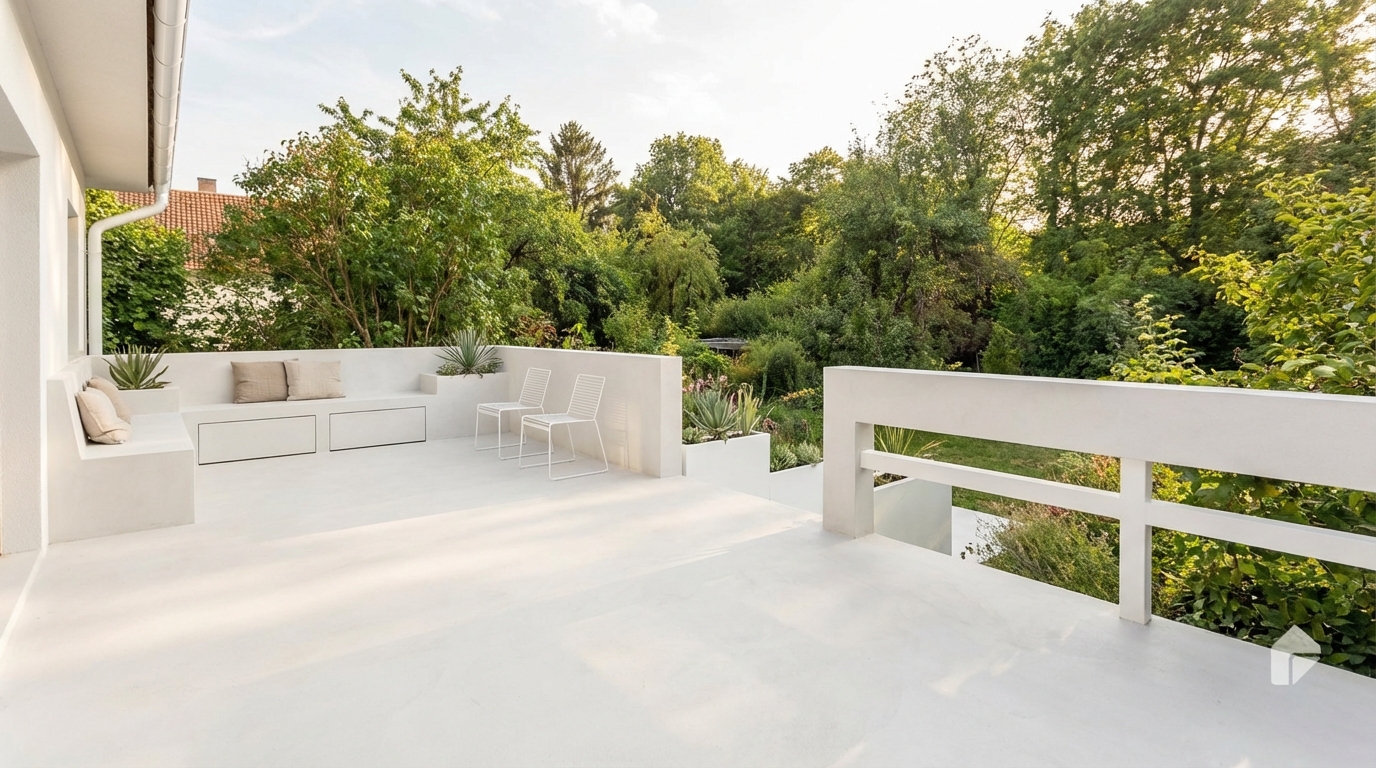
Scandinavian · outdoor patio
See all scandinavian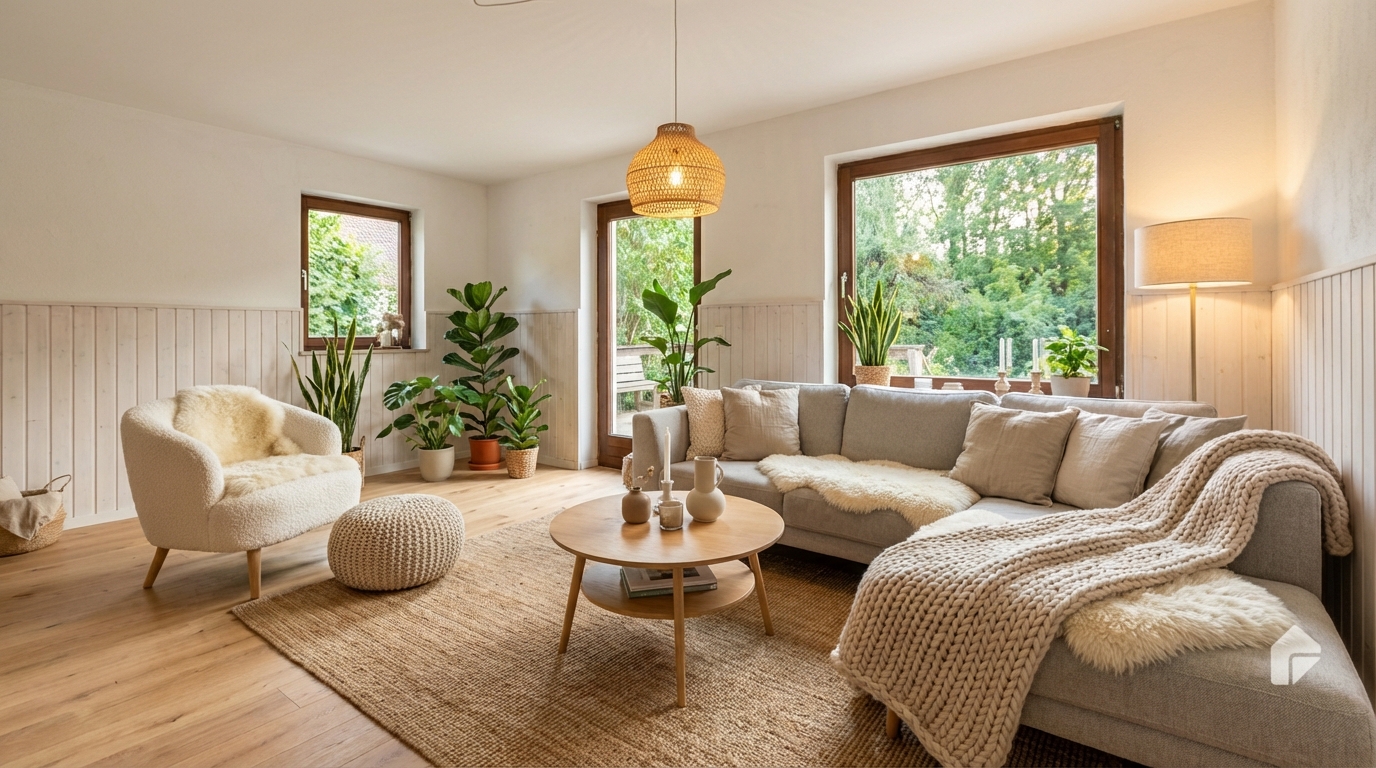
Industrial · outdoor patio
See all industrial
Japandi · outdoor patio
See all japandi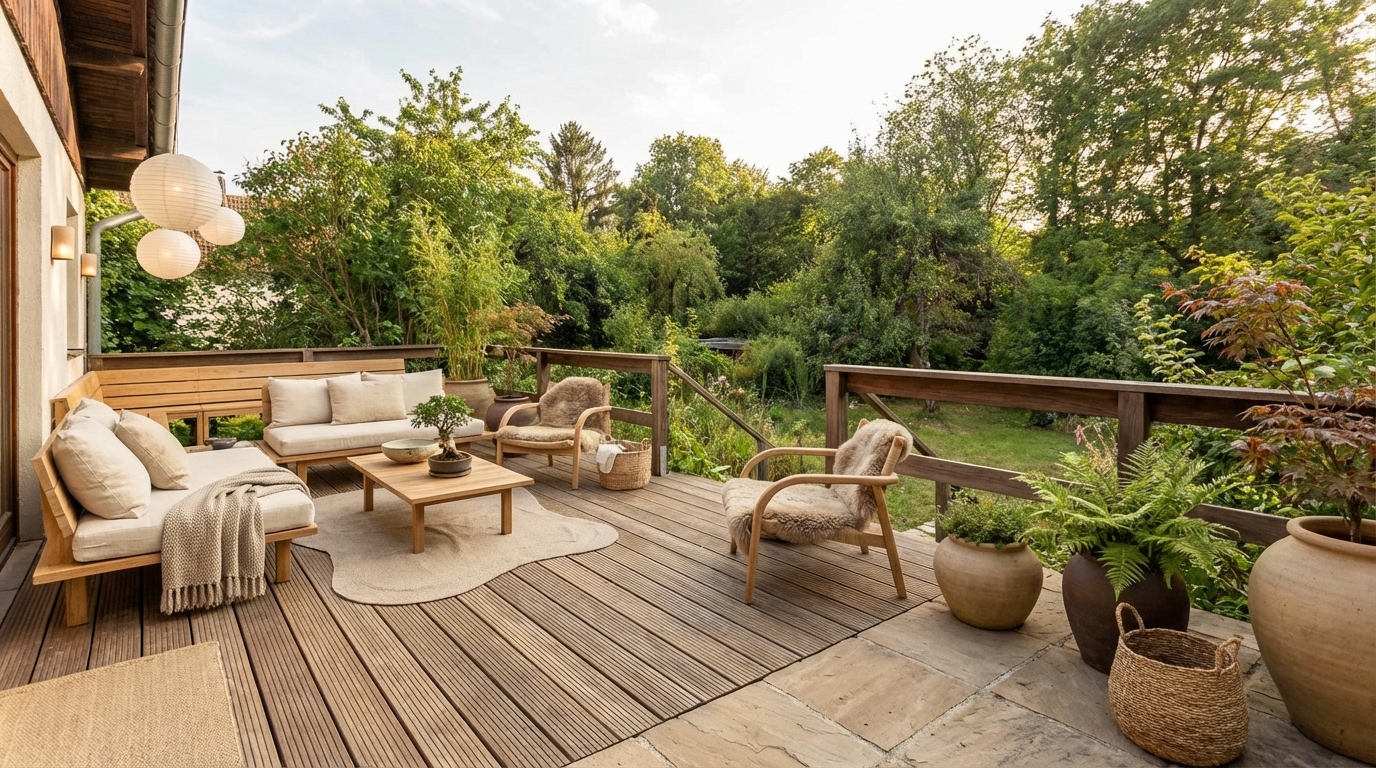
Coastal · outdoor patio
See all coastal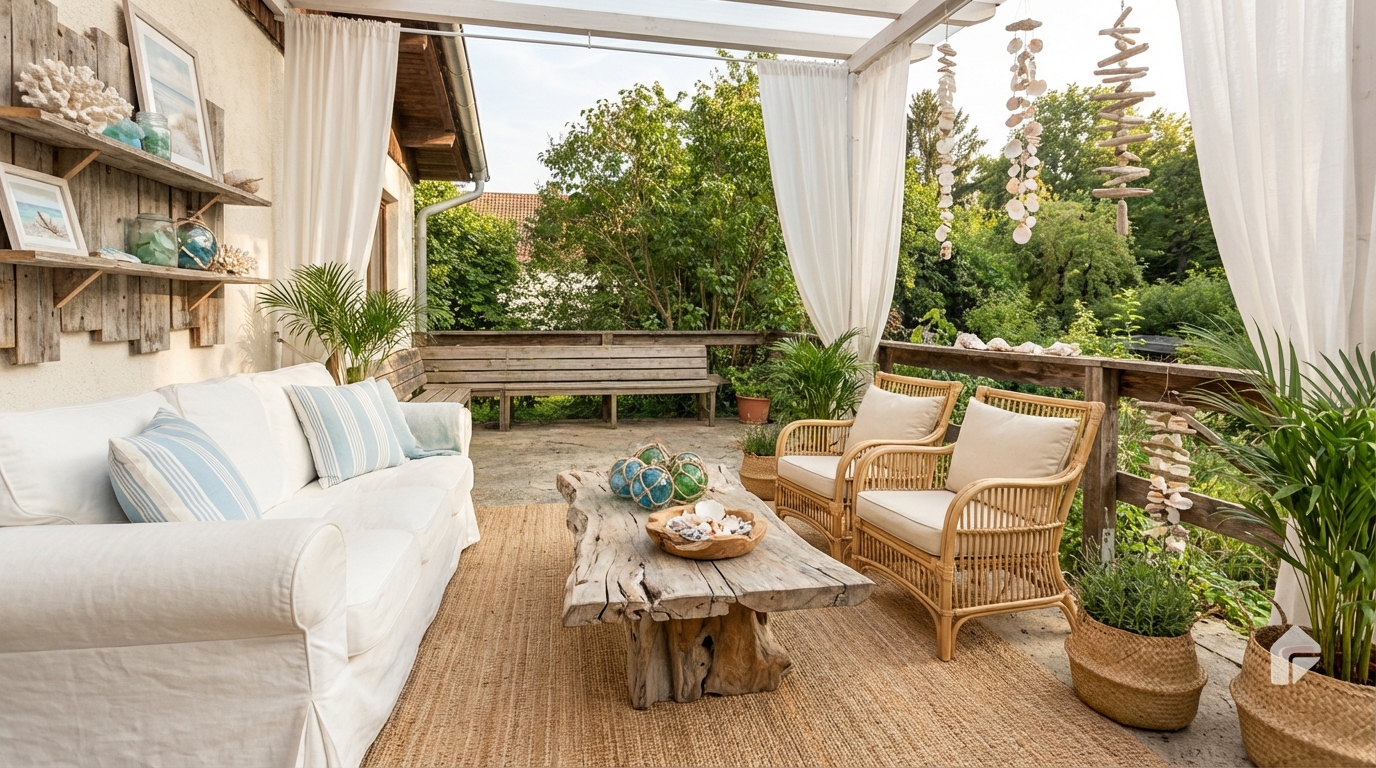
Bohemian · outdoor patio
See all bohemian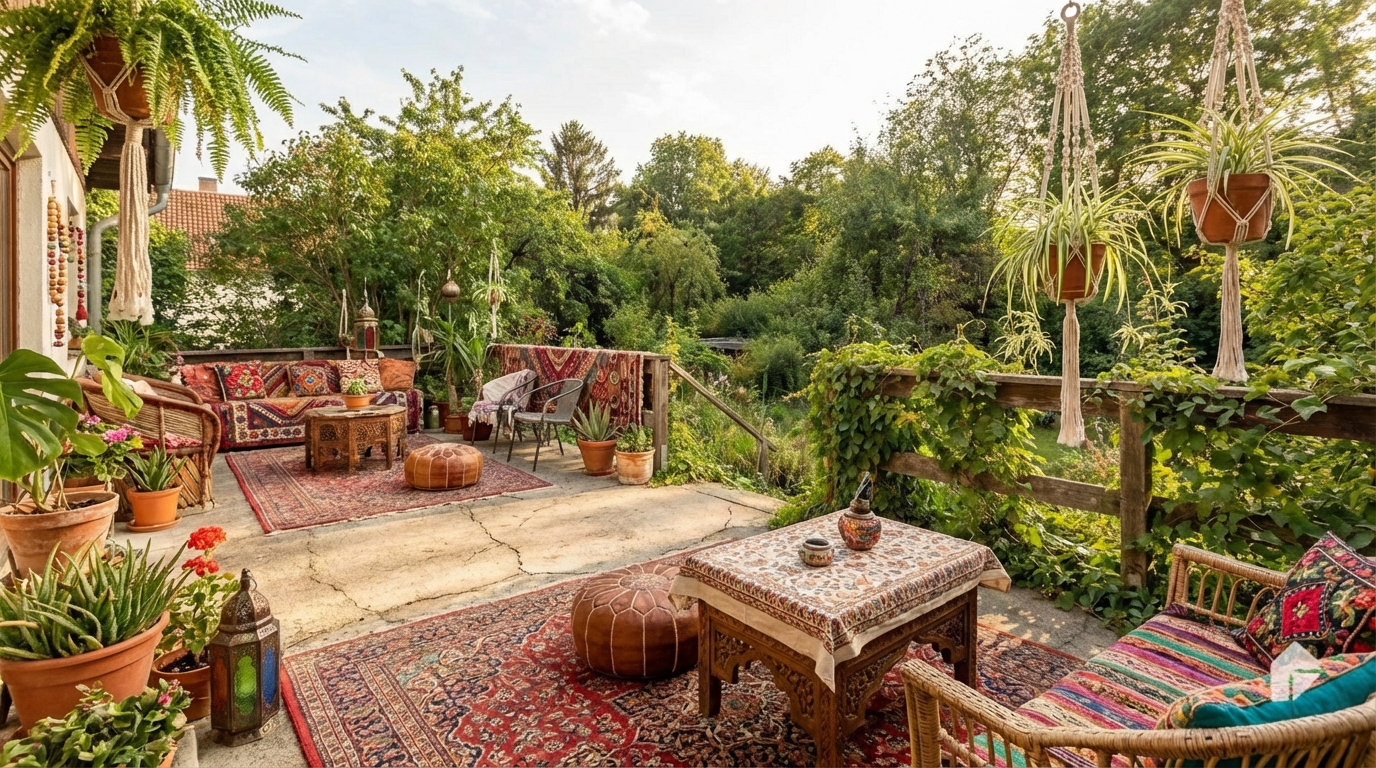
Farmhouse · outdoor patio
See all farmhouse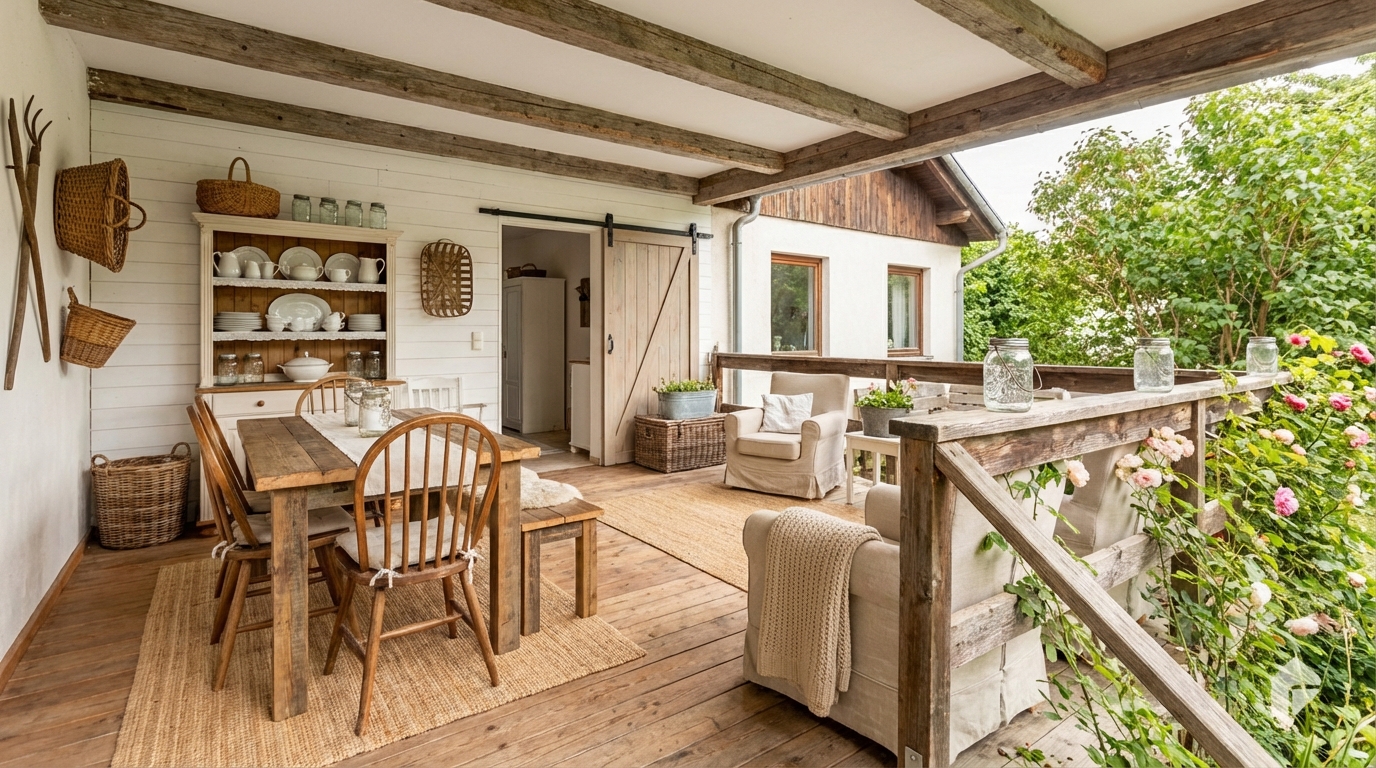
Contemporary · outdoor patio
See all contemporaryMore outdoor patio ideas
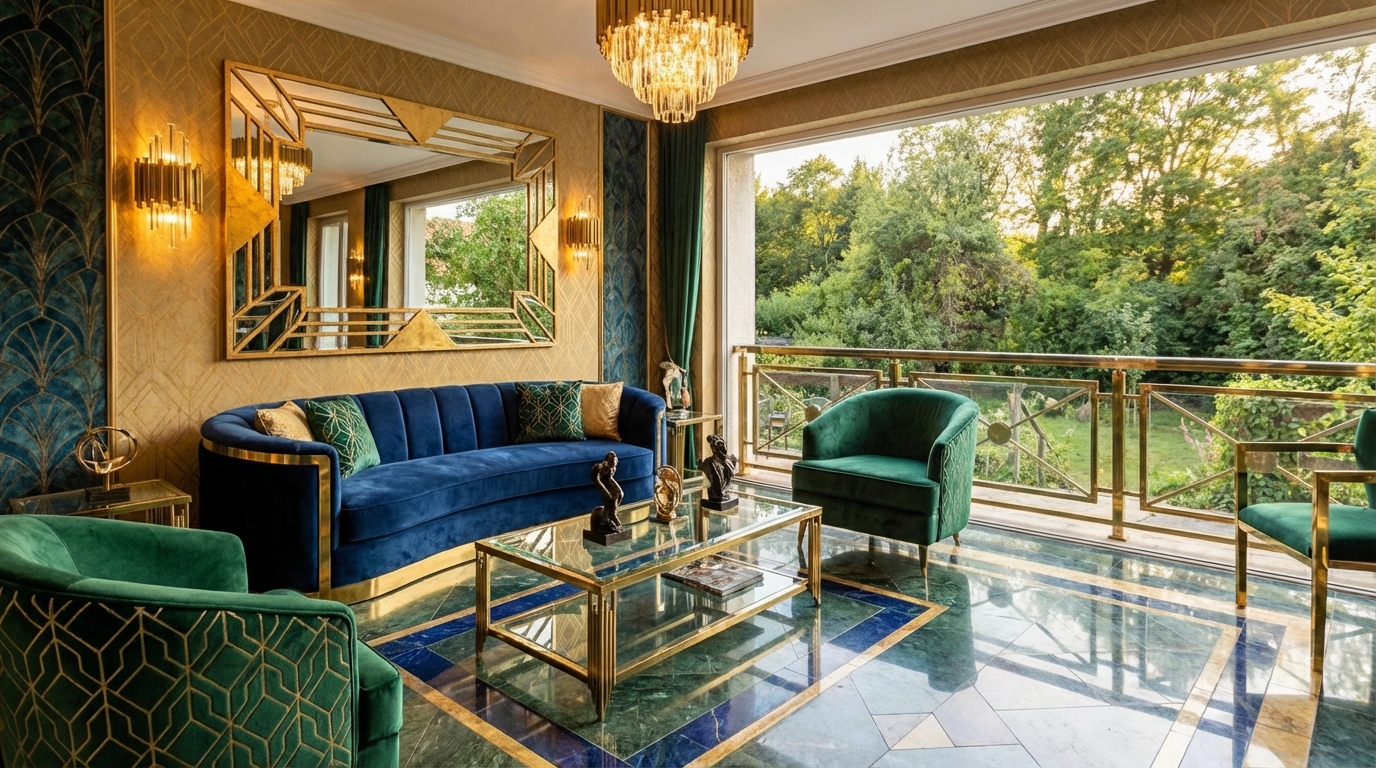
Art Deco Patio Design Ideas
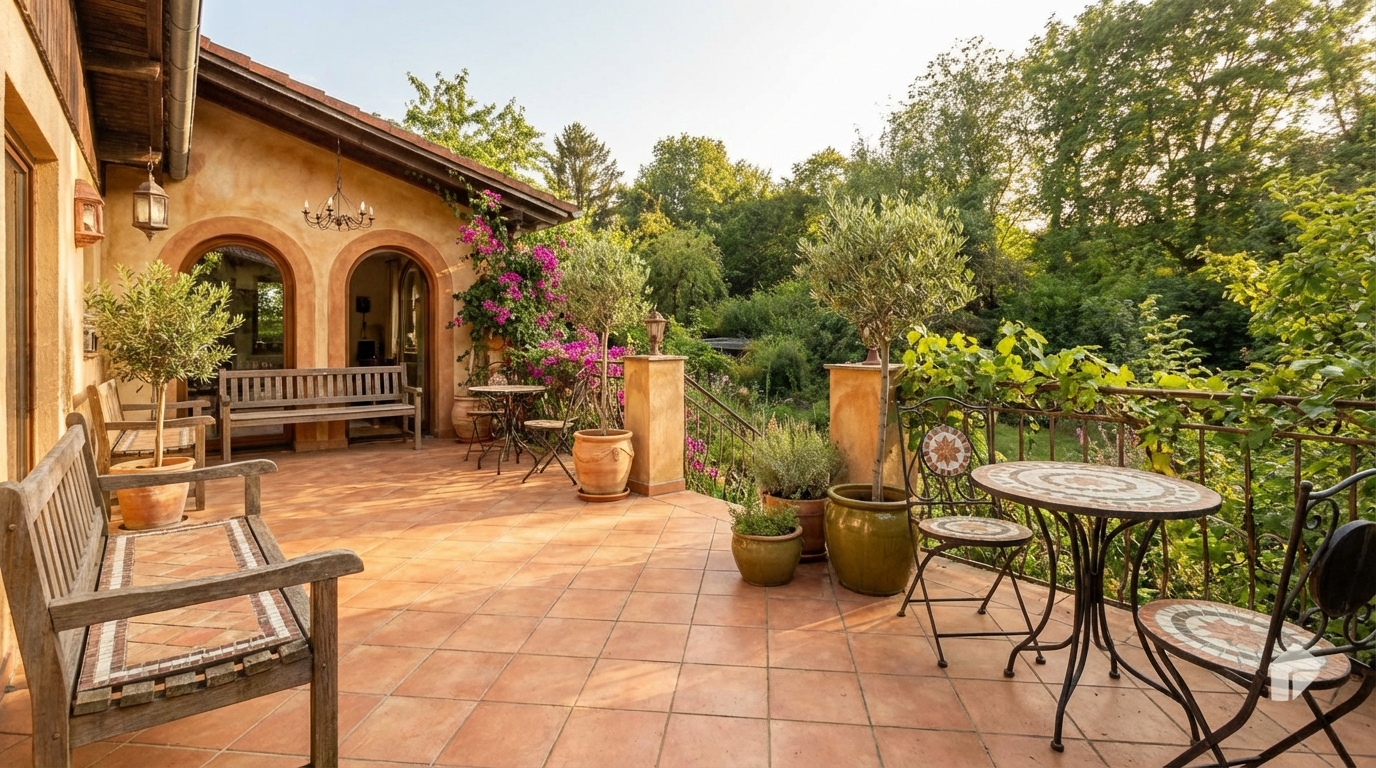
Mediterranean Patio Design Ideas
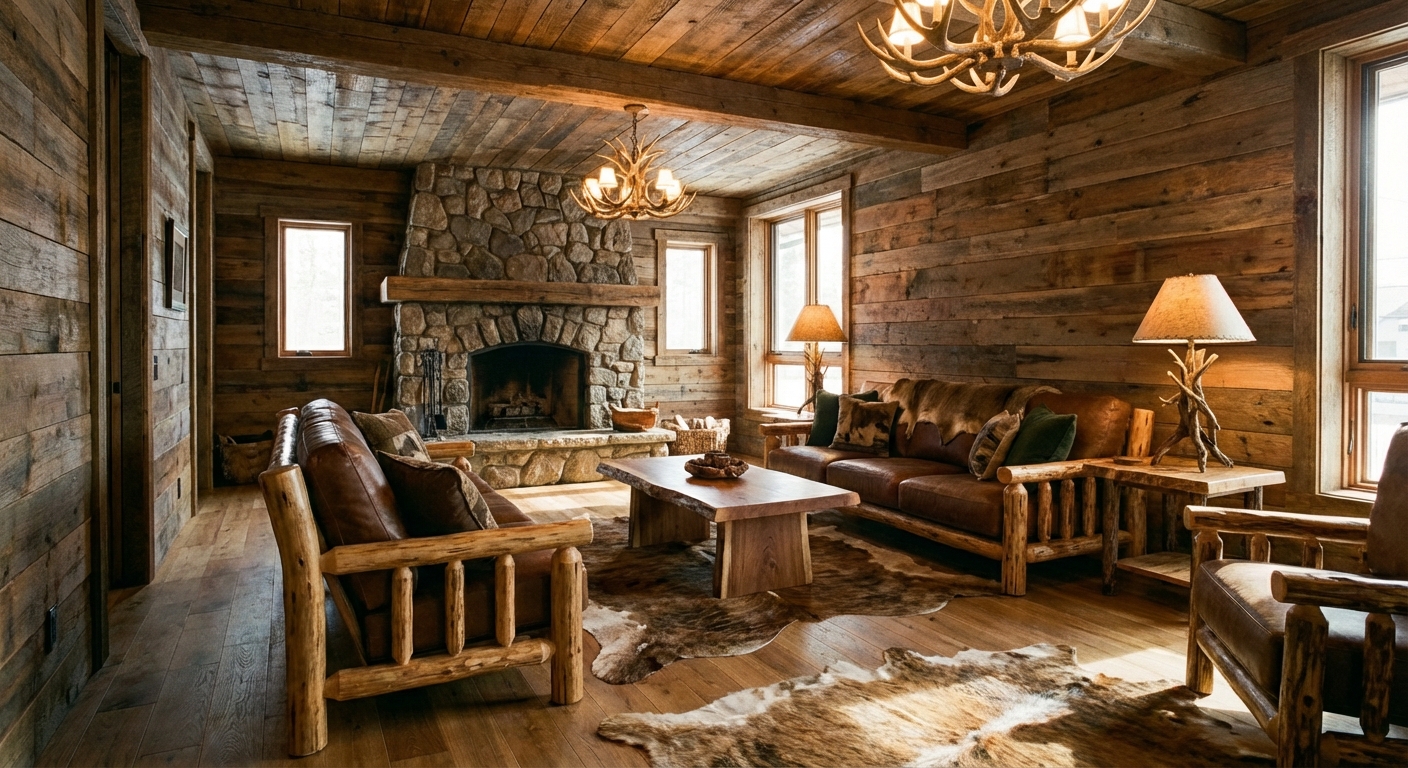
Rustic Patio Design Ideas
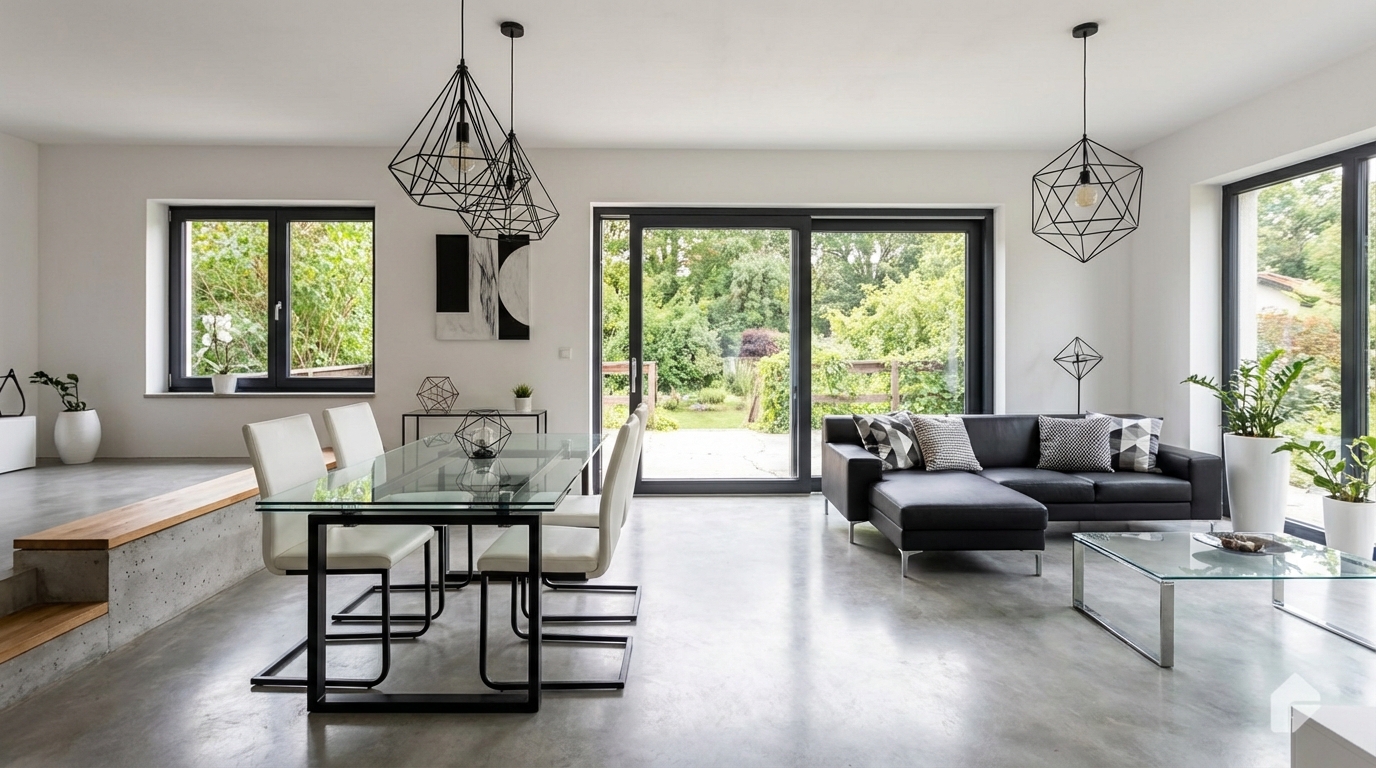
Transitional Patio Design Ideas
Wabi-Sabi Patio Design Ideas
French Country Patio Design Ideas
Maximalist Patio Design Ideas
Hollywood Regency Patio Design Ideas
Cottagecore Patio Design Ideas
Biophilic Patio Design Ideas
Tropical Patio Design Ideas
Eclectic Patio Design Ideas
Preview your own outdoor patio with AI
Upload a photo of your outdoor patio, pick a style, and compare directions before buying furniture or committing to paint. Every hub on this page is a shortcut into testing the idea on your actual space.
Quick answers about outdoor patio design
Pair this hub with related style directions, visual tools, and room guides.
Frequently Asked Questions
Q1 How do I make a small patio feel designed?
An outdoor rug (6x9 or 8x10) under the seating, one pendant or a zig-zag of string lights overhead, and a repeated color from the room just inside. Those three moves shift a patio from "leftover space" to "outdoor room" without buying a single new piece of furniture.
Q2 Does outdoor furniture need to match the interior?
Not exactly, but the palettes should relate. Pulling one or two colors or materials from the adjacent indoor room makes the transition read intentional. A warm oak dining table inside pairs naturally with teak outside; a dark interior can echo outward with matte black aluminum or deep-stained wood.
Q3 What lighting works best on a patio?
Warm-tone (2700K) overhead — string lights hung 8 to 10 feet up, a weather-rated pendant, or integrated LED cafe lights — plus one lower accent like a lantern or a table lamp rated for damp/wet locations. Cool-white LED (4000K+) outdoors usually reads harsh.
Q4 What materials survive year-round outdoors?
Teak, white oak, powder-coated aluminum, and polyethylene wicker-look resin handle sun, rain, and freeze cycles across most US climates. Natural rattan, untreated softwood, and low-grade steel will not. For cushions, look for solution-dyed acrylic (Sunbrella, Perennials) with quick-dry foam.
Q5 Can AI help design a patio?
Yes — previewing seating scale, rug color, and lighting direction is much easier than guessing from catalog photos.
Preview outdoor patio ideas on your real space
Download Intero and see this design in your space in seconds.
No credit card. No signup. Just results.