Minimalist Interior Design That Still Feels Like a Home
Minimalist design is not empty — it is edited. Fewer objects, stricter palettes, and a higher bar for what earns space in the room. Done well, a minimalist room feels calm and intentional; done poorly, it feels cold, like a waiting area rather than a home. The difference is almost always in the textiles, the lighting, and the one material with real character. Minimalism pulls from both Japanese restraint (ma, wabi-sabi, emphasis on negative space) and European reductionism (Dieter Rams, Donald Judd), and the practical consequence is that every surface has to earn its presence. A minimalist living room usually has two or three pieces of seating, one coffee table, one rug, one light source at each reading height, and nothing else on the walls or floor. The palette stays tight — typically one warm white, one mid-tone neutral (bone, oatmeal, pale stone), and one deeper anchor (charcoal, walnut, or muted black). Hidden storage is doing most of the work: tall built-ins, wall-mounted cabinets with push-to-open doors, and under-bed storage keep the visual plane clear.
Key elements of minimalist style
- Tight color palette
- Hidden storage
- Essential furniture only
- One or two hero materials
- Soft, diffuse lighting
- Clean surfaces
Signature palette
Minimalist rooms usually pull from a tight palette. Start with these and introduce bolder accents only once the base works in your lighting.
Popular rooms for this style:
Minimalist ideas by room
Narrow a style direction to the room you are actually redesigning.
Bedroom · minimalist
All bedroom ideas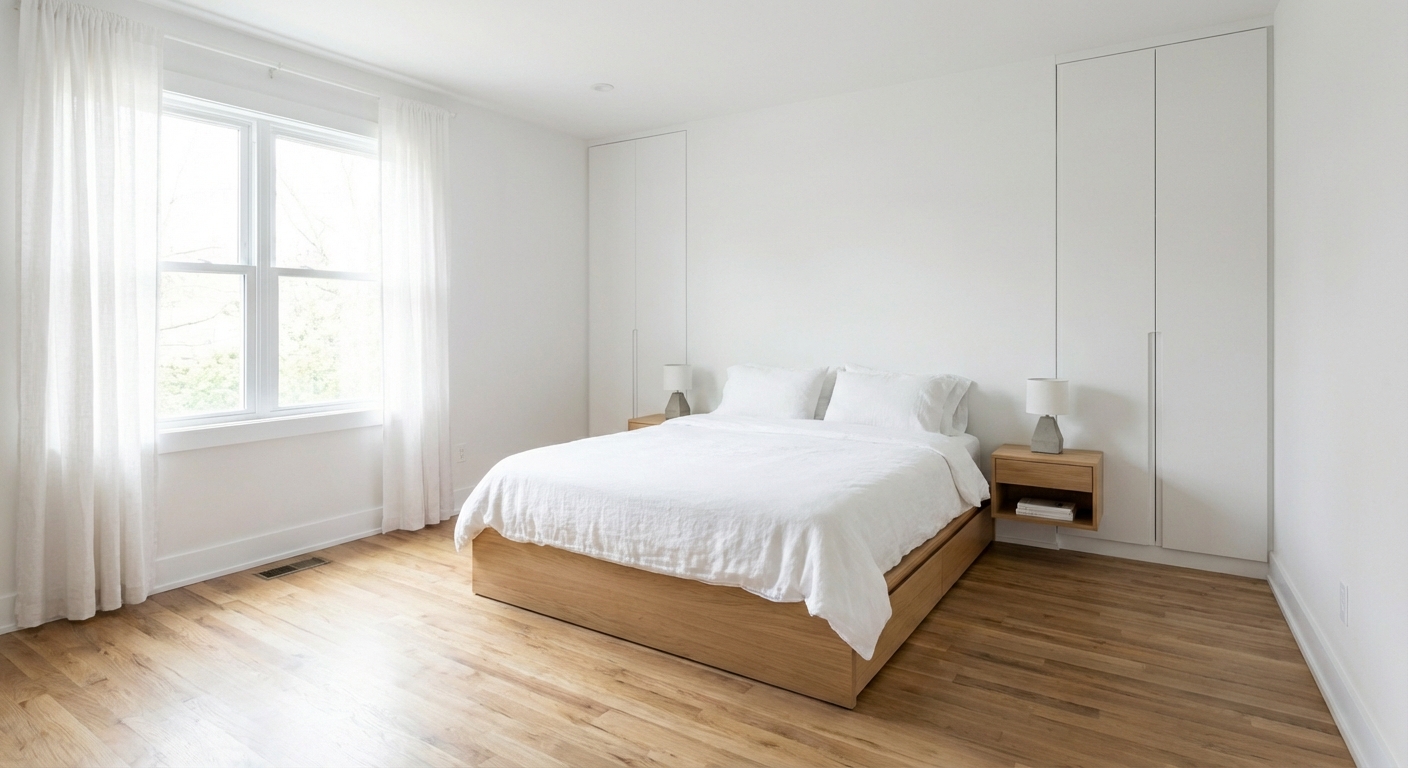
Living Room · minimalist
All living room ideasHome Office · minimalist
All home office ideas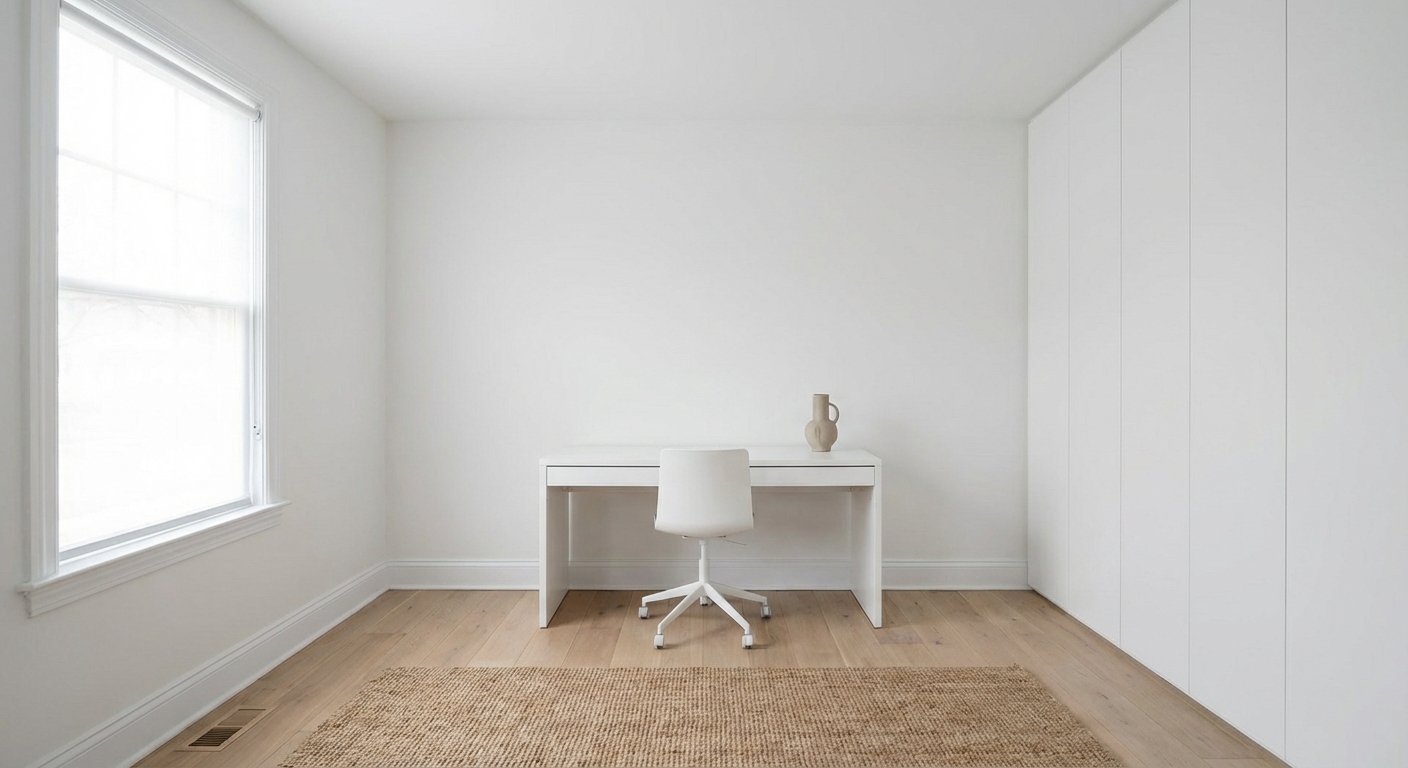
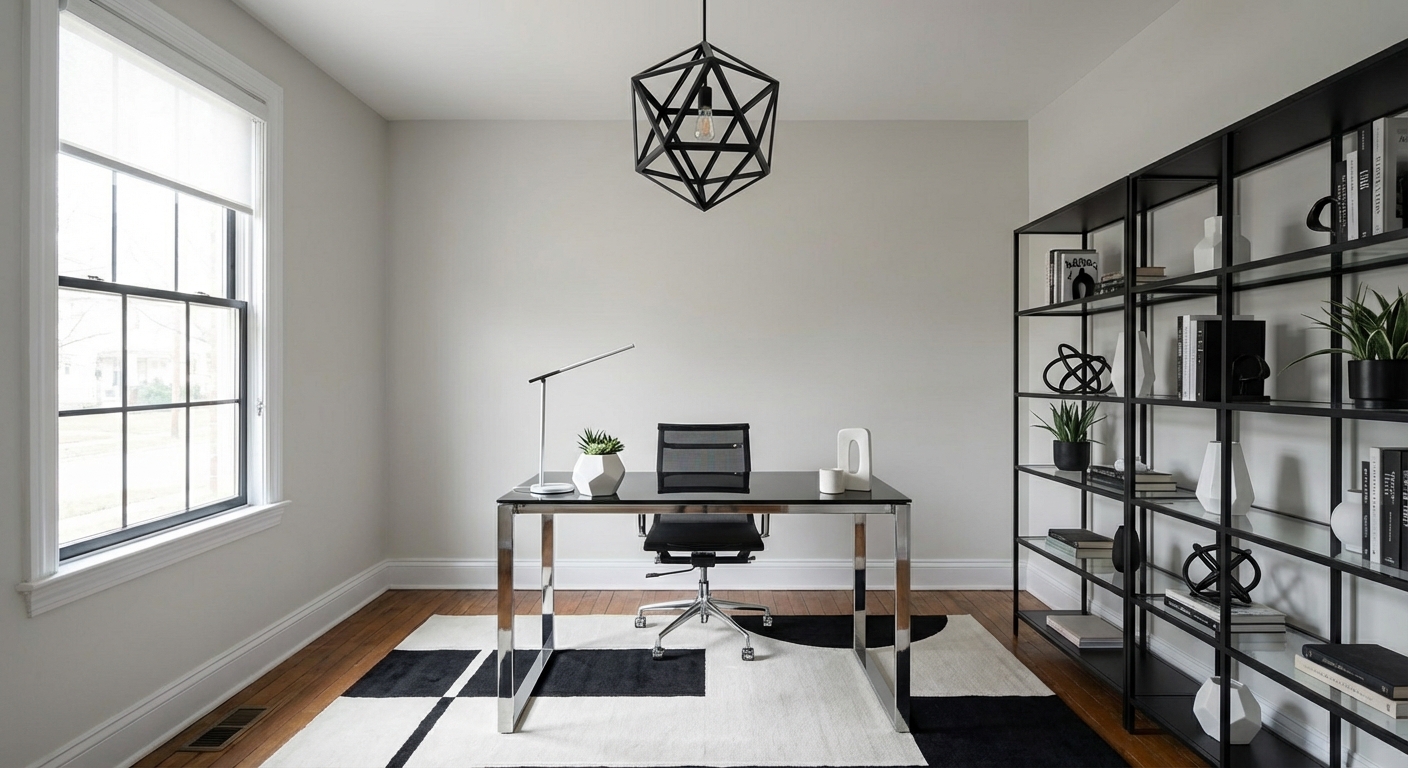
Bathroom · minimalist
All bathroom ideas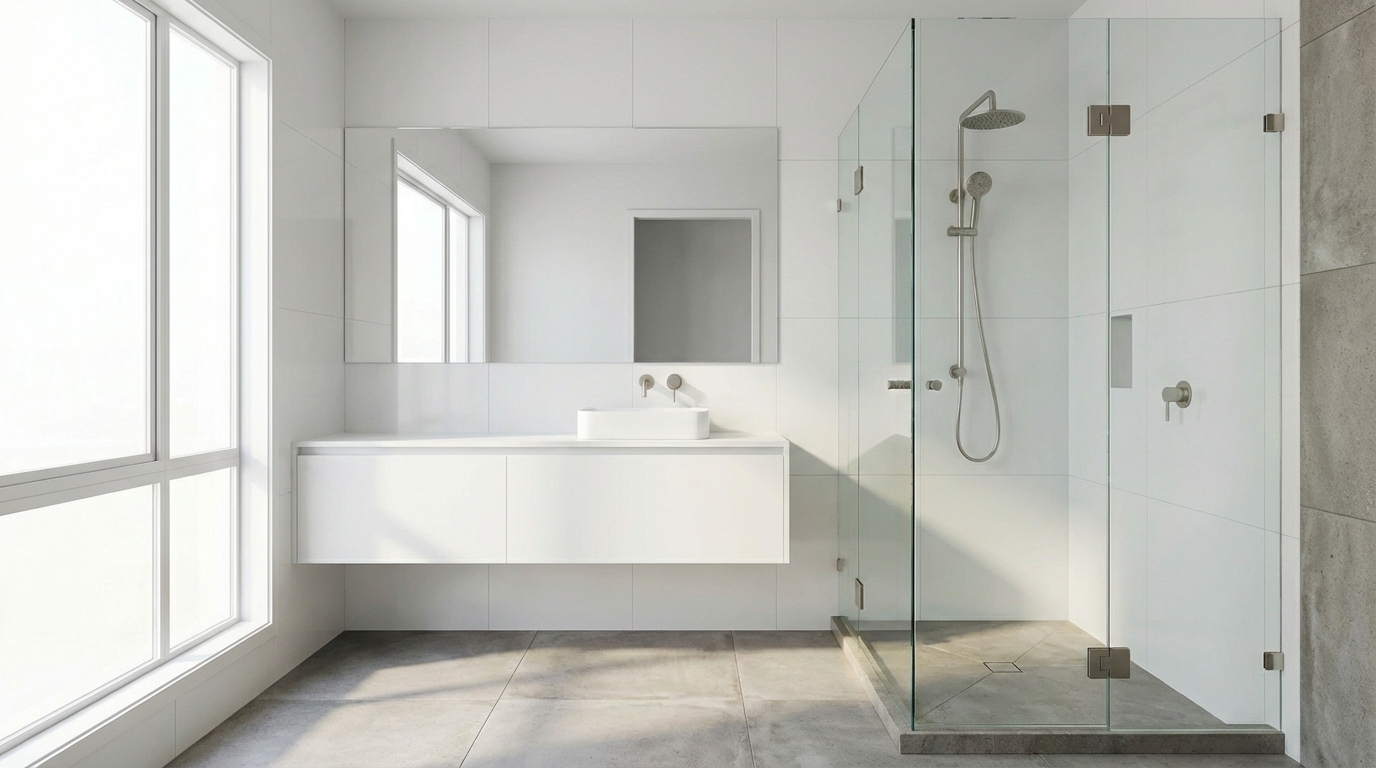
More minimalist ideas
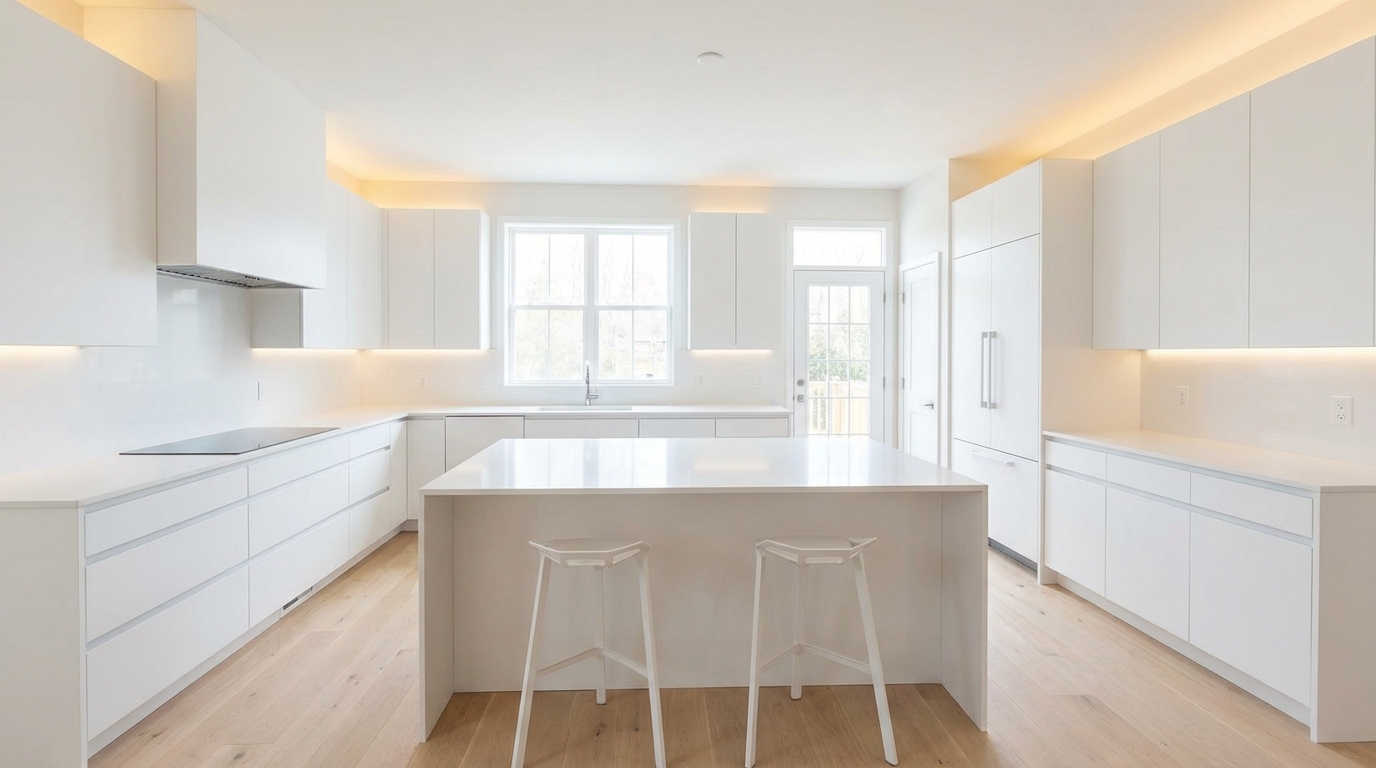
Minimalist Kitchen Design Ideas
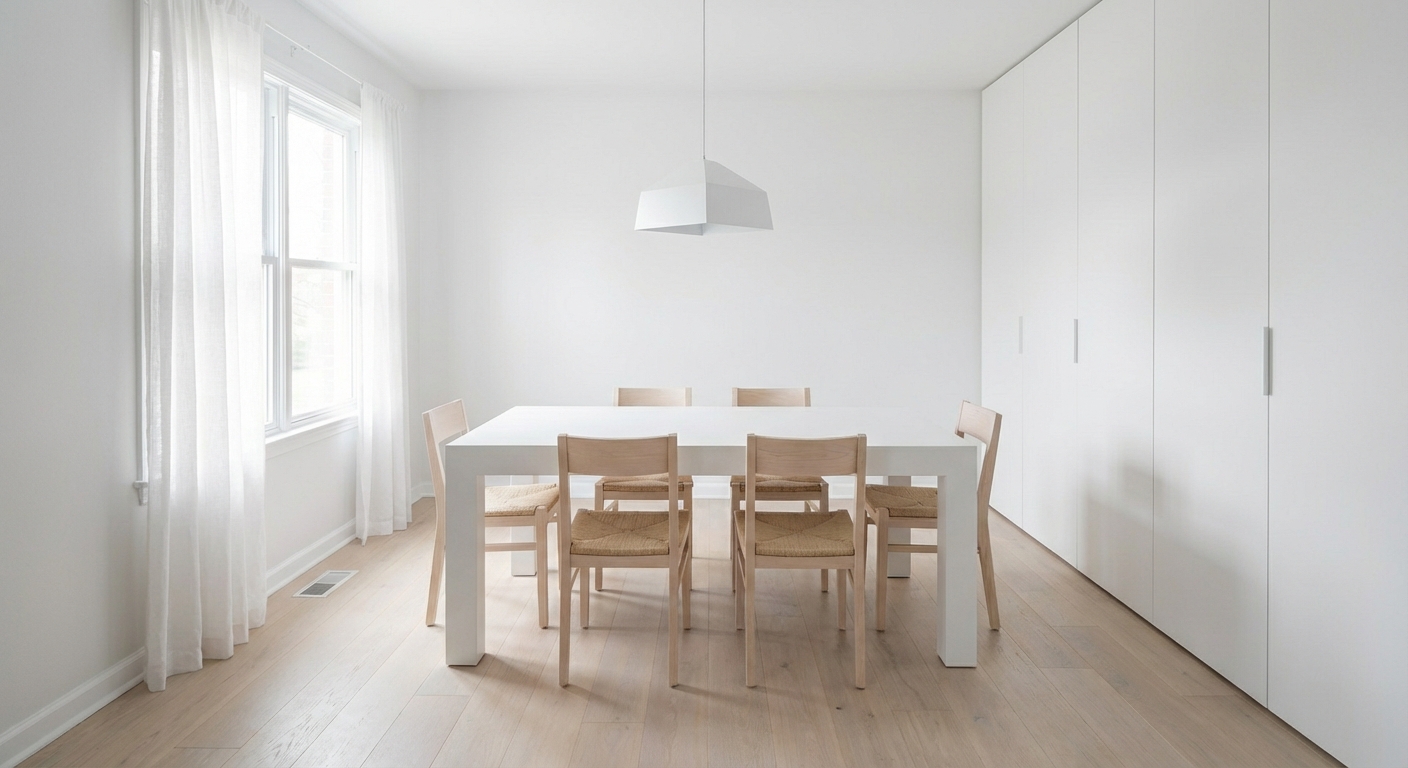
Minimalist Dining Room Design Ideas
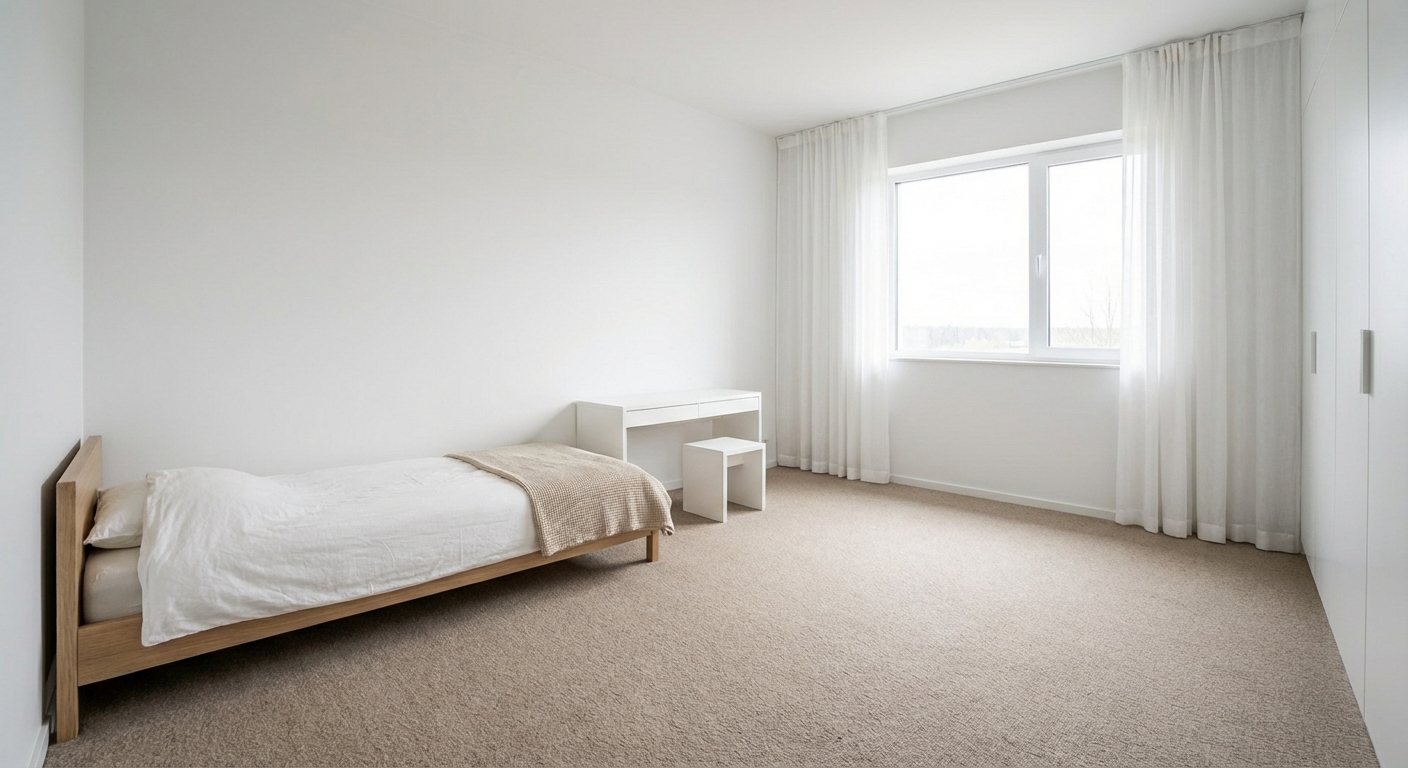
Minimalist Kids Room Design Ideas
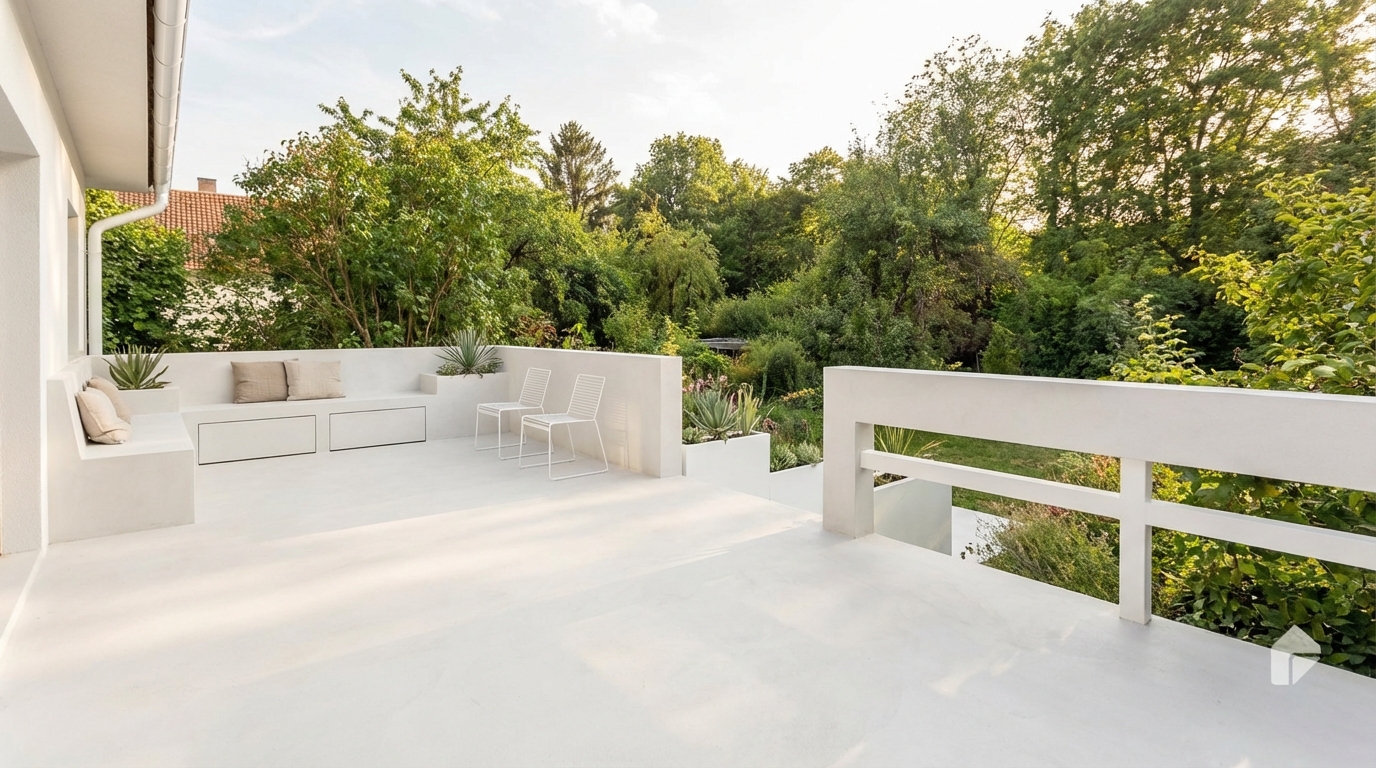
Minimalist Patio Design Ideas
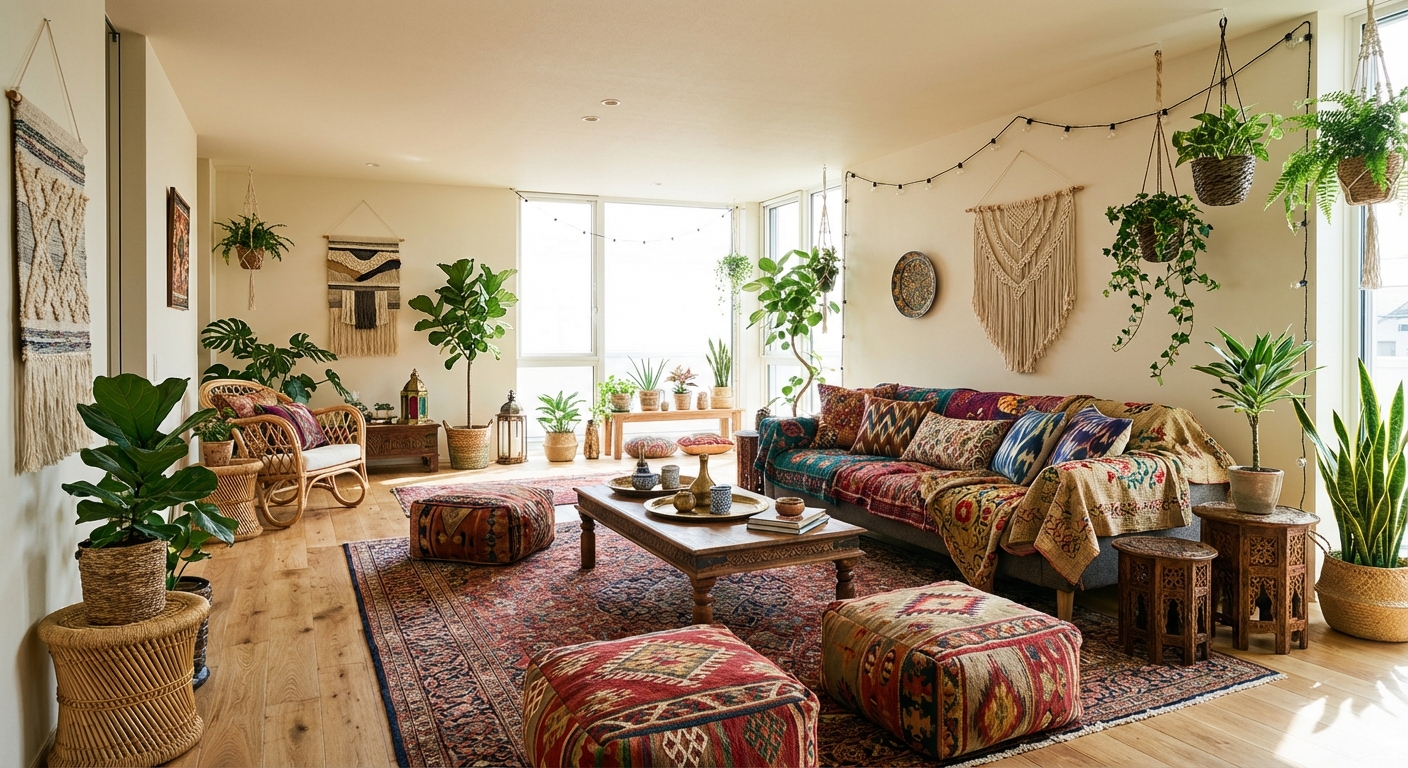
Decluttering & Furniture Editing: When Less Is More
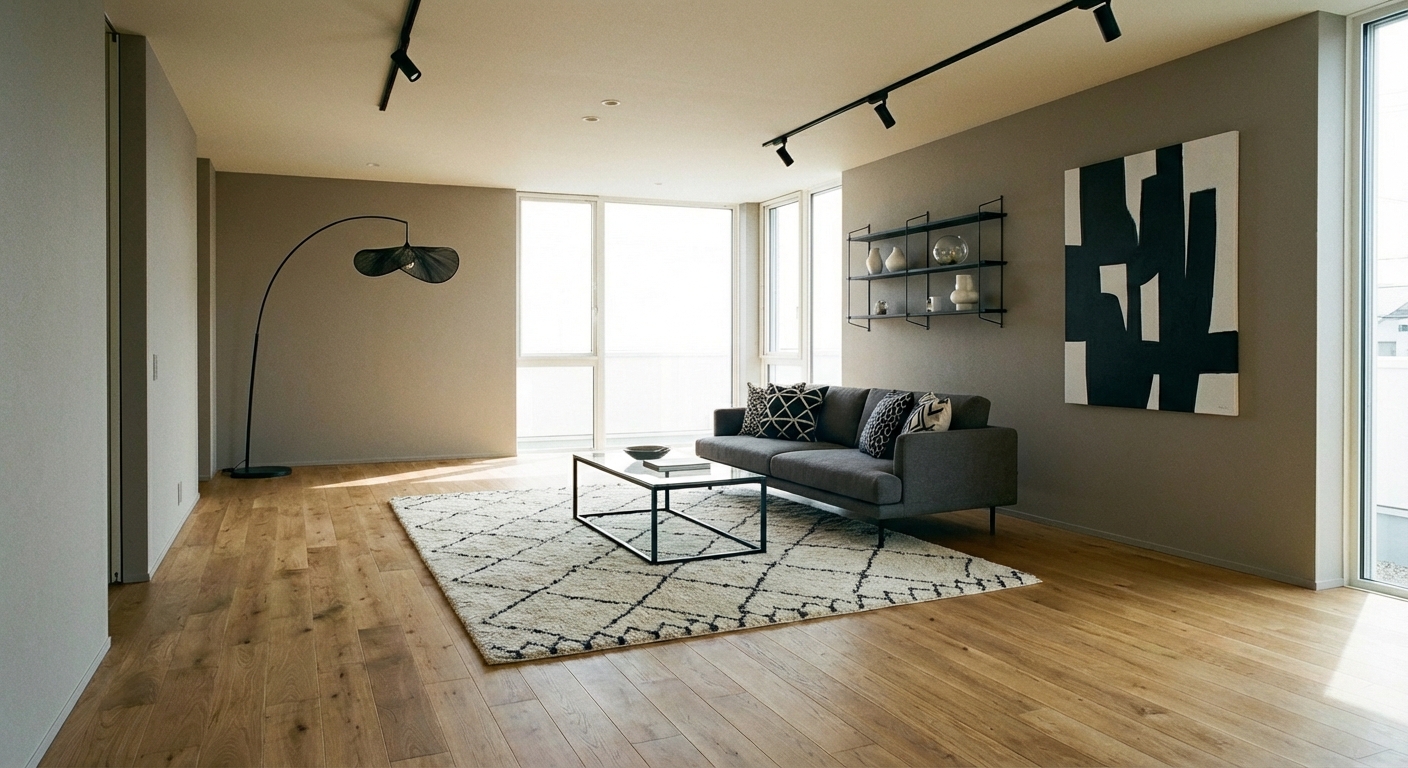
Modern vs Minimalist: What Is the Difference?
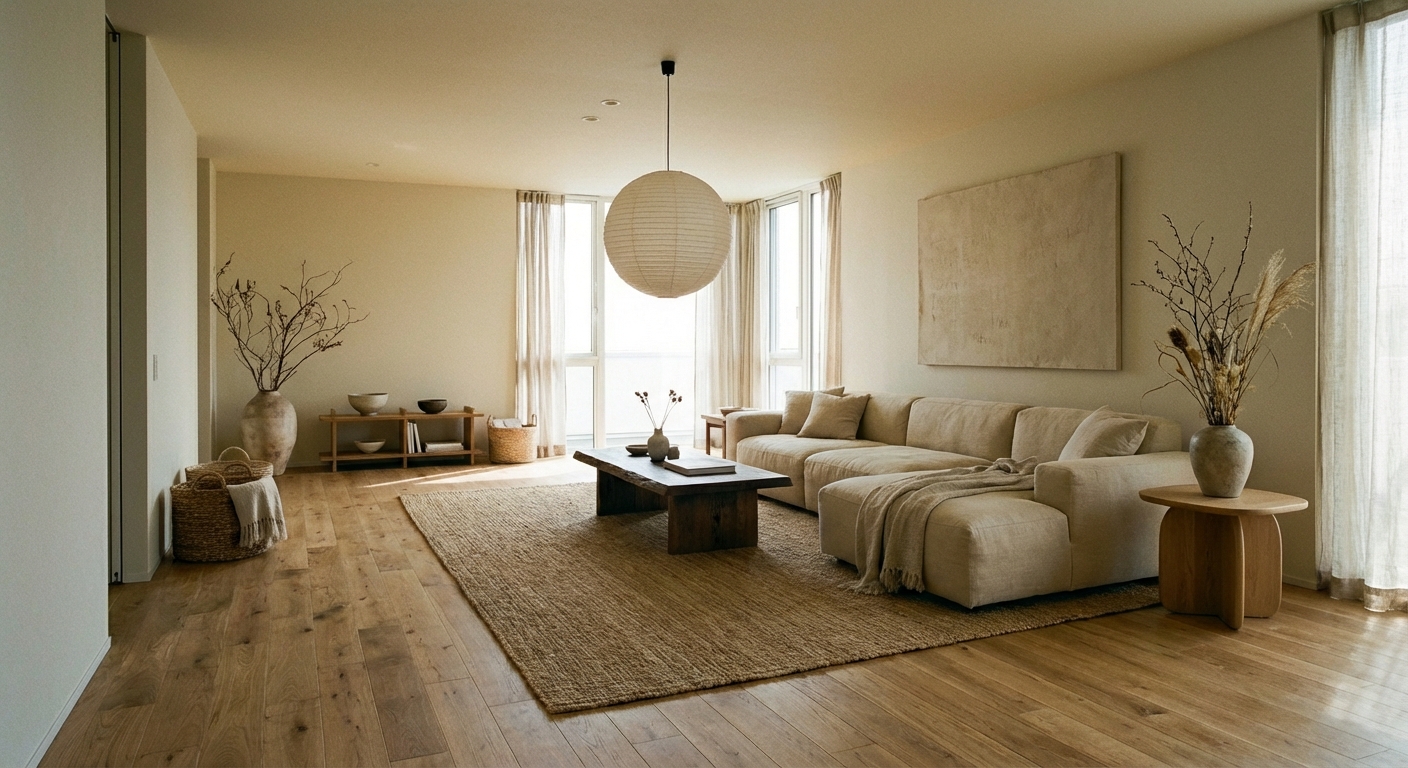
Japandi vs Minimalist: Warmth vs Purity
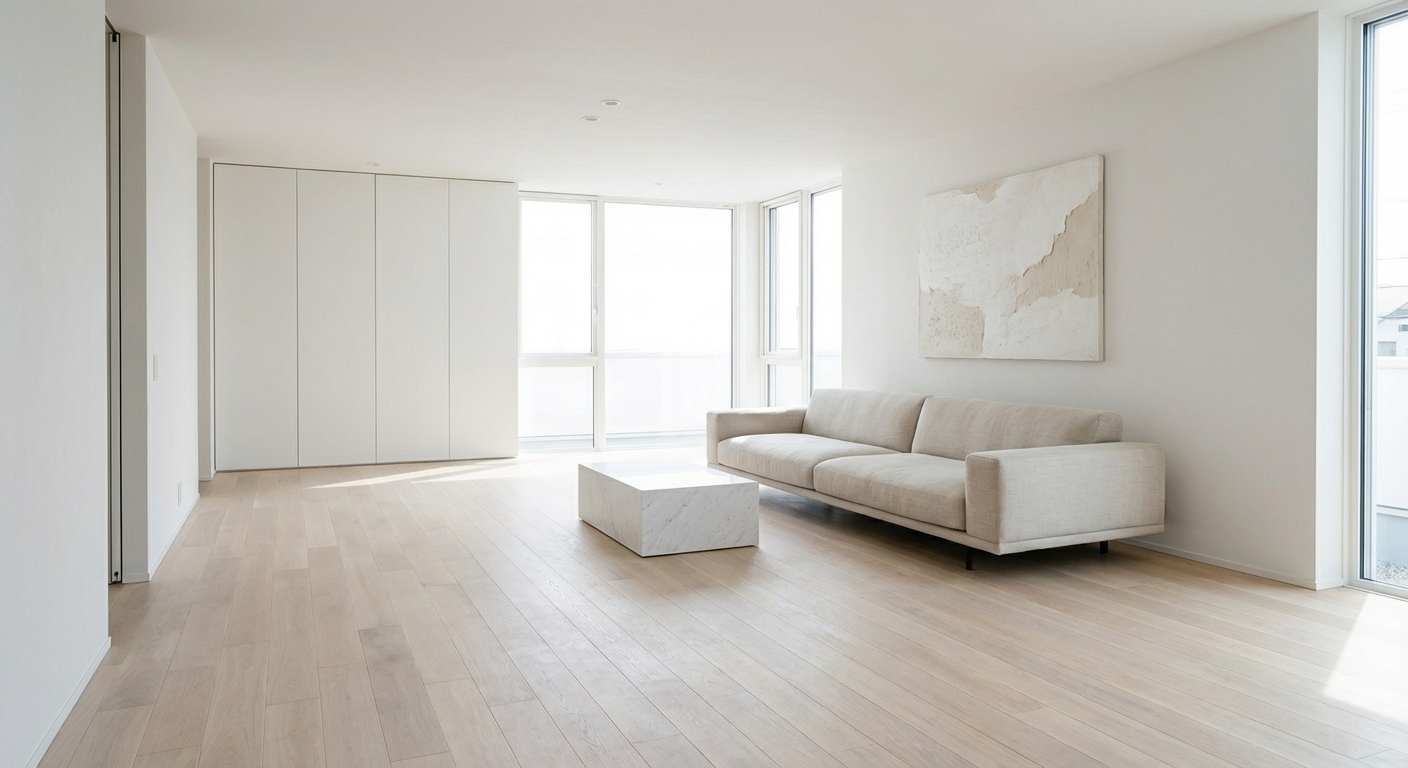
Minimalist vs Maximalist: Two Extremes of Interior Design
Organic Modern vs Minimalist: Curved Warmth vs Clean Reduction
Complete Guide to Minimalist Design
Try minimalist on your room with AI
Styles look different in every room. Upload a photo, choose minimalist, and compare the palette, furniture scale, and material direction on your actual space before buying anything.
Quick answers about minimalist style
Move between style and room views or preview the direction on your space.
Frequently Asked Questions
Q1 Is minimalist the same as modern?
They overlap but are not identical. Modern is a design era from the mid-20th century with specific traits (flat planes, tapered legs, honest materials). Minimalist is a discipline of reduction that can be applied to many styles, including modern, Japandi, or Scandinavian. You can have a maximalist modern room and a minimalist farmhouse.
Q2 How do I make a minimalist room feel warm?
One warm wood (rift-cut oak or walnut), one textured textile (wool boucle, linen, mohair throw), and layered lighting at three heights. A minimalist room with only white and cool grey almost always reads cold; swap in a mid-tone wood floor or ceiling plank and the temperature shifts immediately.
Q3 How little furniture is too little?
If the room no longer supports its basic function — seating for guests, bedside access, a place to set down a drink or a book — it has crossed from minimalist to empty. A three-seat sofa and one chair is minimalist; a single chair in a 300-square-foot living room is unfinished.
Q4 Can AI help me test a minimalist palette?
Yes. Previewing tight, low-contrast palettes on your exact room is one of the most useful ways to validate a minimalist direction.
Preview minimalist on your real rooms with AI
Download Intero and see this design in your space in seconds.
No credit card. No signup. Just results.