How to Design a Home Office Engineered for Productivity
A great home office is not about aesthetics alone — it is about ergonomics, lighting, acoustics, and visual calm. Get all four right and your focus will follow.
$$
Voyez la Transformation
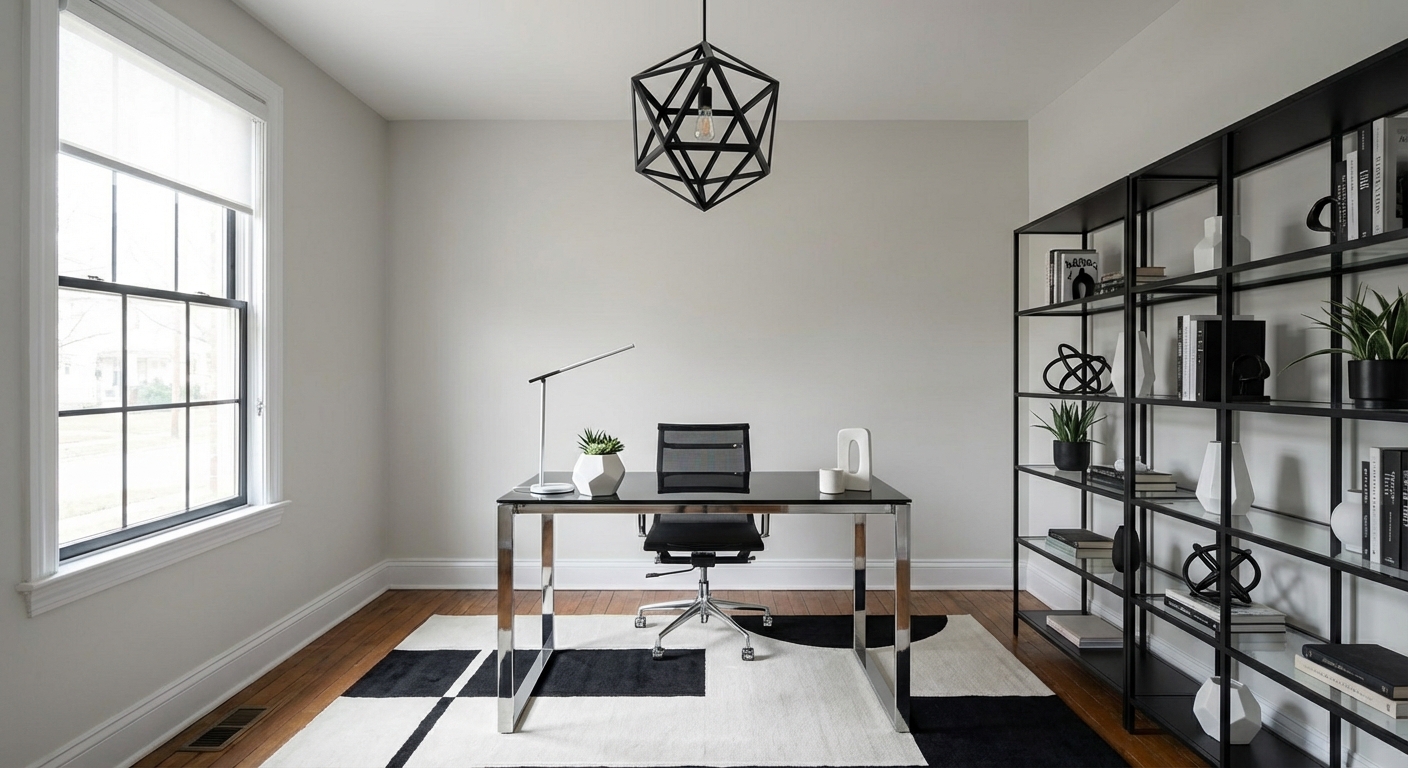
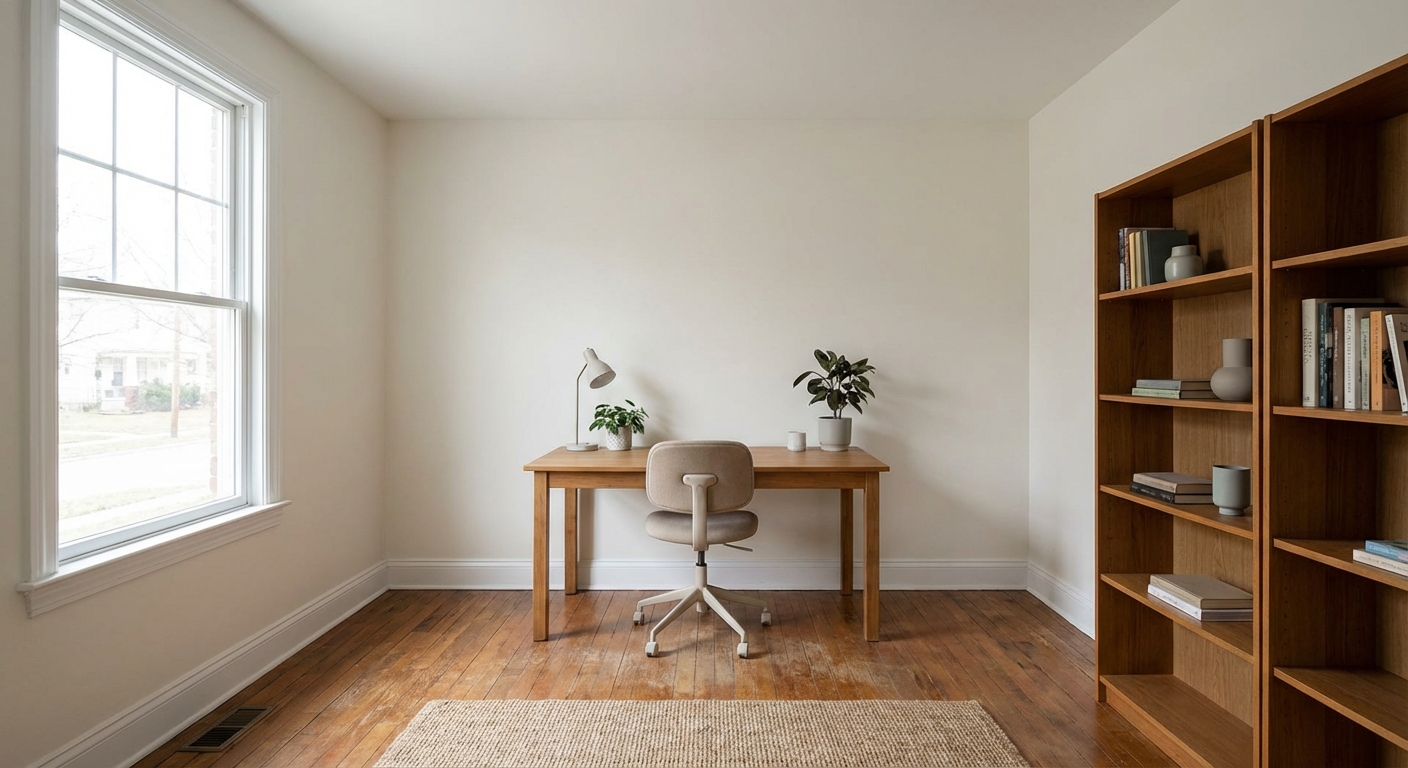
Téléchargez la photo de votre pièce dans l'app pour voir votre vraie transformation
Palette de Couleurs
Pourquoi Ça Marche
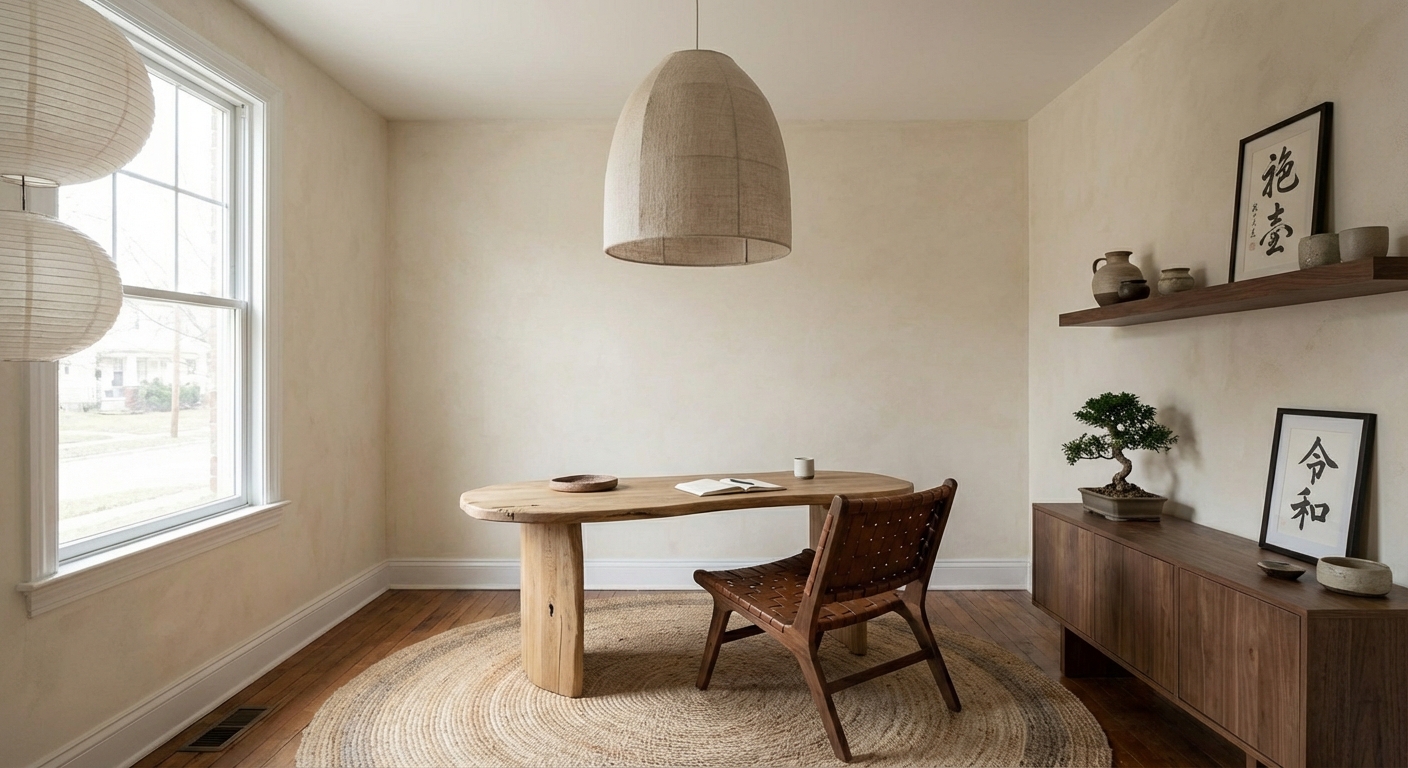
Effective home offices work because they address the four pillars of workspace design: ergonomics (proper desk height, monitor distance, chair support), lighting (layered natural and task lighting to reduce eye strain), acoustics (sound absorption to minimize distractions), and visual environment (clean sightlines that reduce cognitive load). When all four are optimized, focus improves naturally without requiring willpower to overcome environmental friction.
Comment Obtenir Ce Style
- 1
Choose a location with natural light and minimal distractions
- 2
Invest in an ergonomic chair and properly sized desk
- 3
Set up your monitor at eye level with the window to the side
- 4
Add sound absorption through rugs, curtains, or panels
- 5
Organize cables and supplies for a clean workspace
- 6
Personalize with art and plants that motivate you
Position your desk so natural light comes from the side, not behind the screen — it reduces glare and eye strain.
Essayez avec l'IA
Layoutly helps you visualize the optimal home office layout for your specific room. Upload a photo and test different desk positions, shelving configurations, and design styles to create a workspace that is both productive and inspiring.
Questions Fréquentes
Where should I place my desk in a home office?
Perpendicular to a window is ideal — you get natural light without screen glare. Avoid placing the desk directly facing a window (too much glare) or with your back to a door (psychologically uncomfortable for most people).
What is the most important home office purchase?
An ergonomic chair. You will spend more hours in your office chair than any other piece of furniture. A quality ergonomic chair ($500-$1,200) prevents back pain and improves focus. The desk is secondary — even a simple table works if the chair is right.
How do I reduce distractions in a home office?
Use closed storage to eliminate visual clutter, face your desk toward a wall rather than a busy room, add soft materials (rug, curtains, bookshelf) for sound absorption, and keep only work-related items in the office.
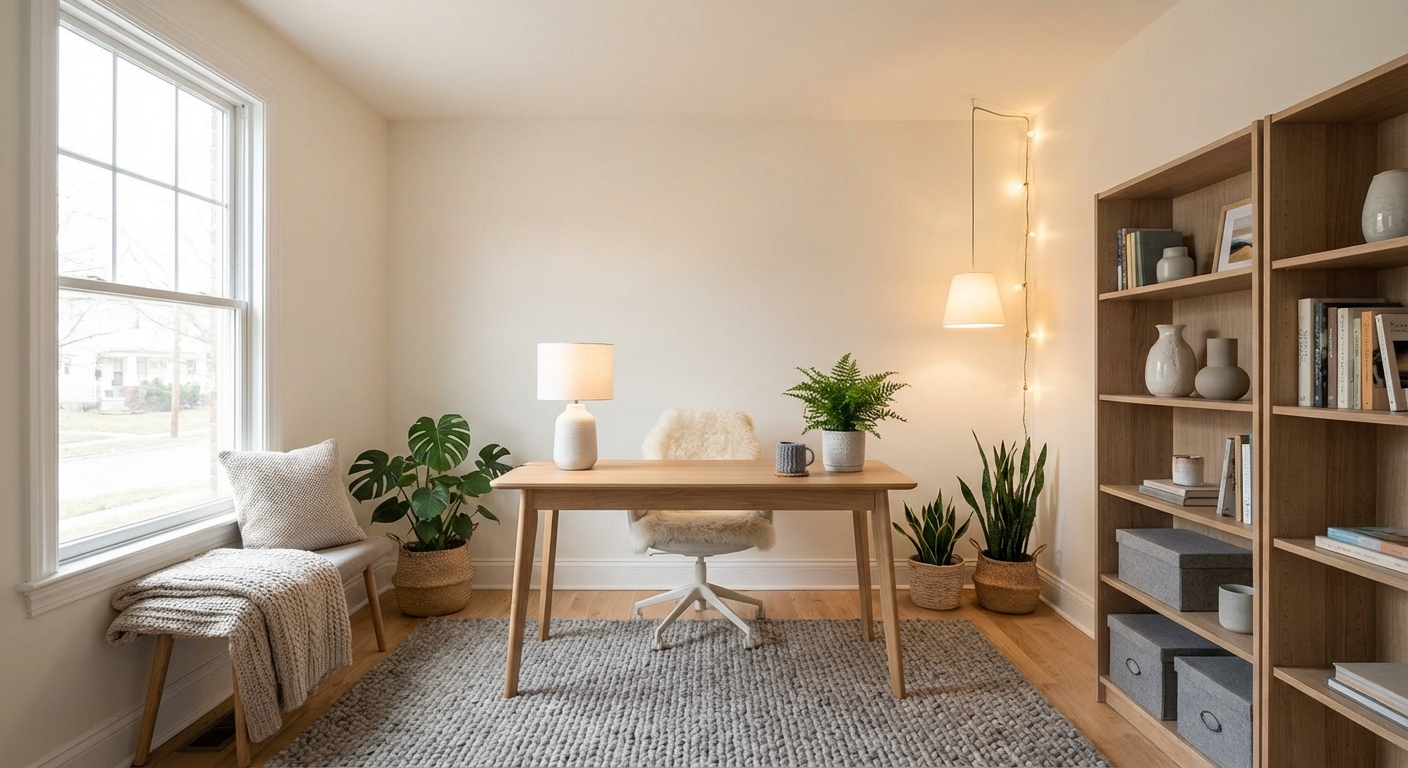
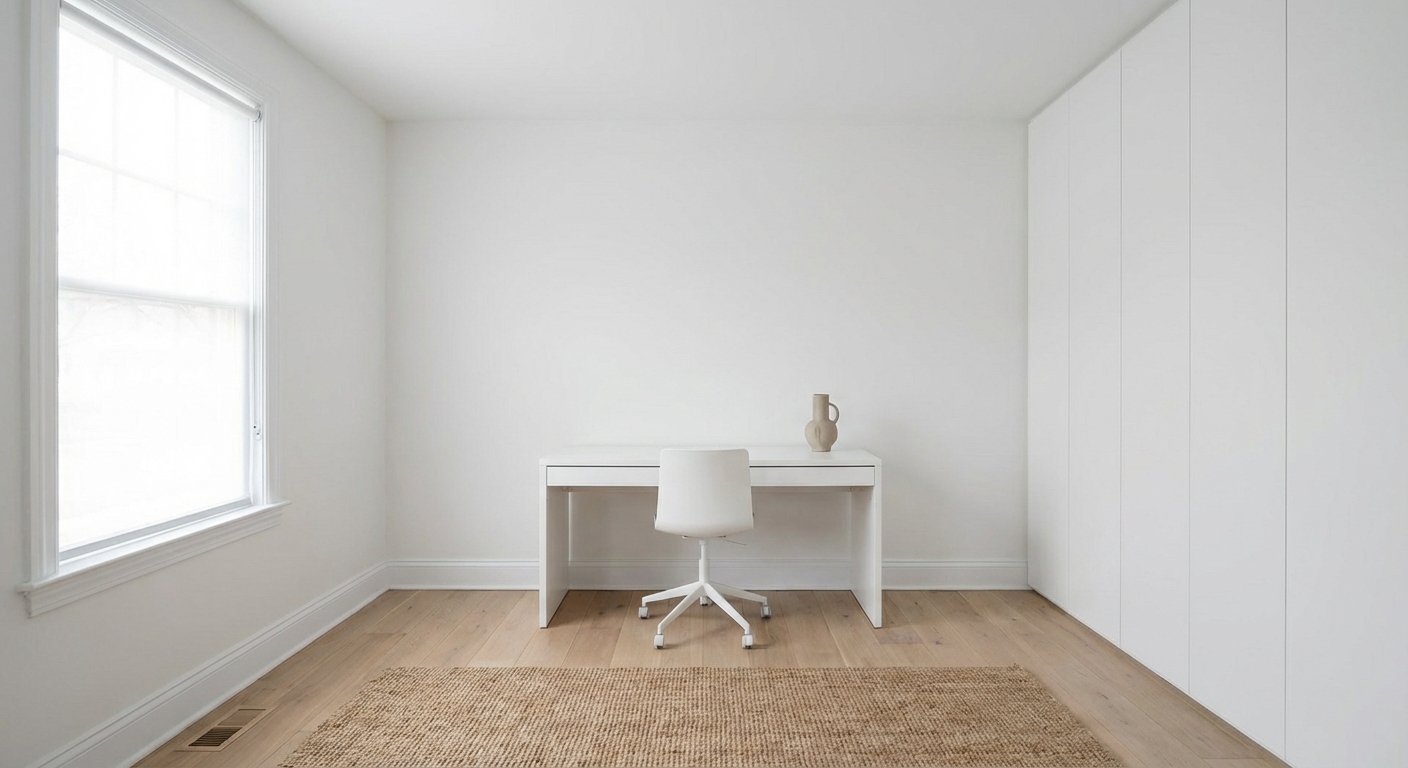
Prêt à Transformer Votre Pièce ?
Téléchargez Layoutly et visualisez ce design dans votre espace en quelques secondes.