The Complete Guide to Industrial Interior Design
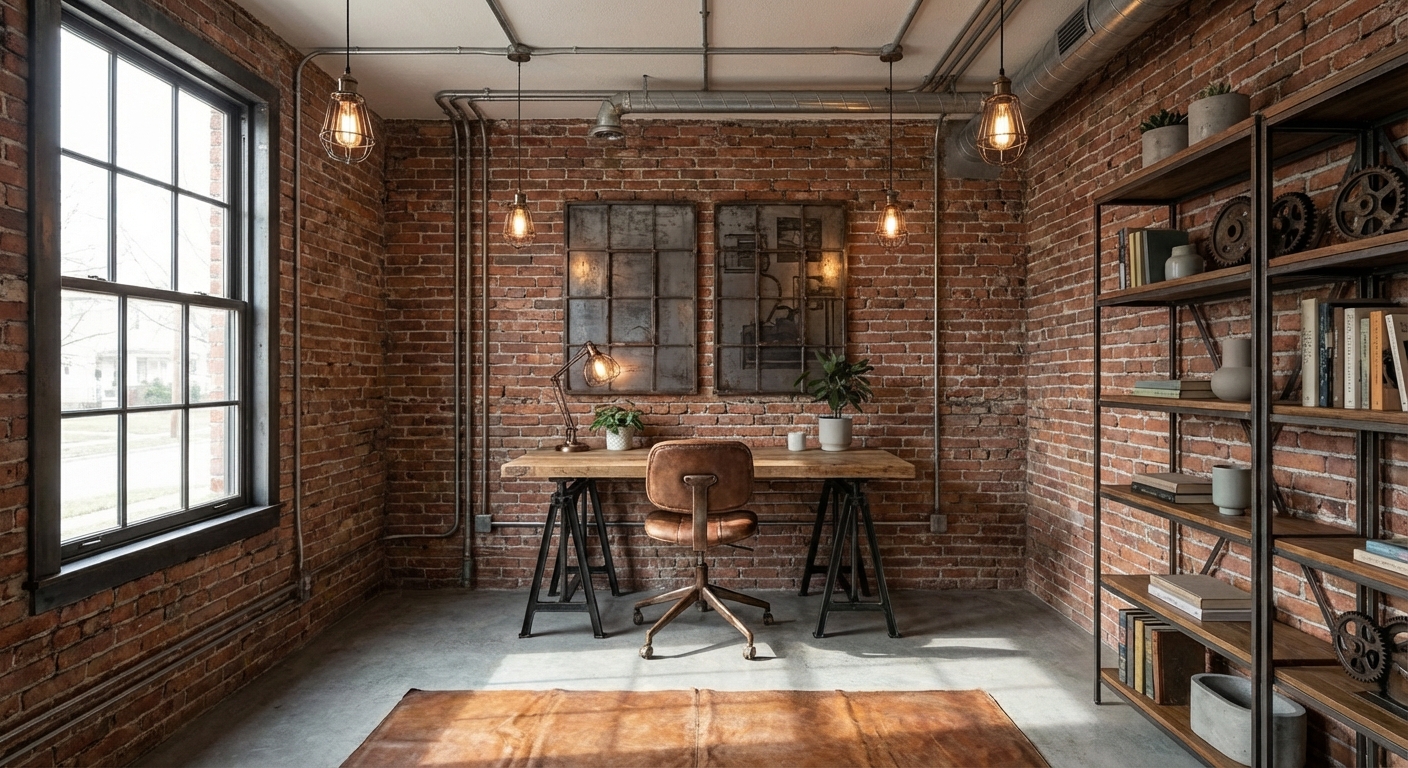
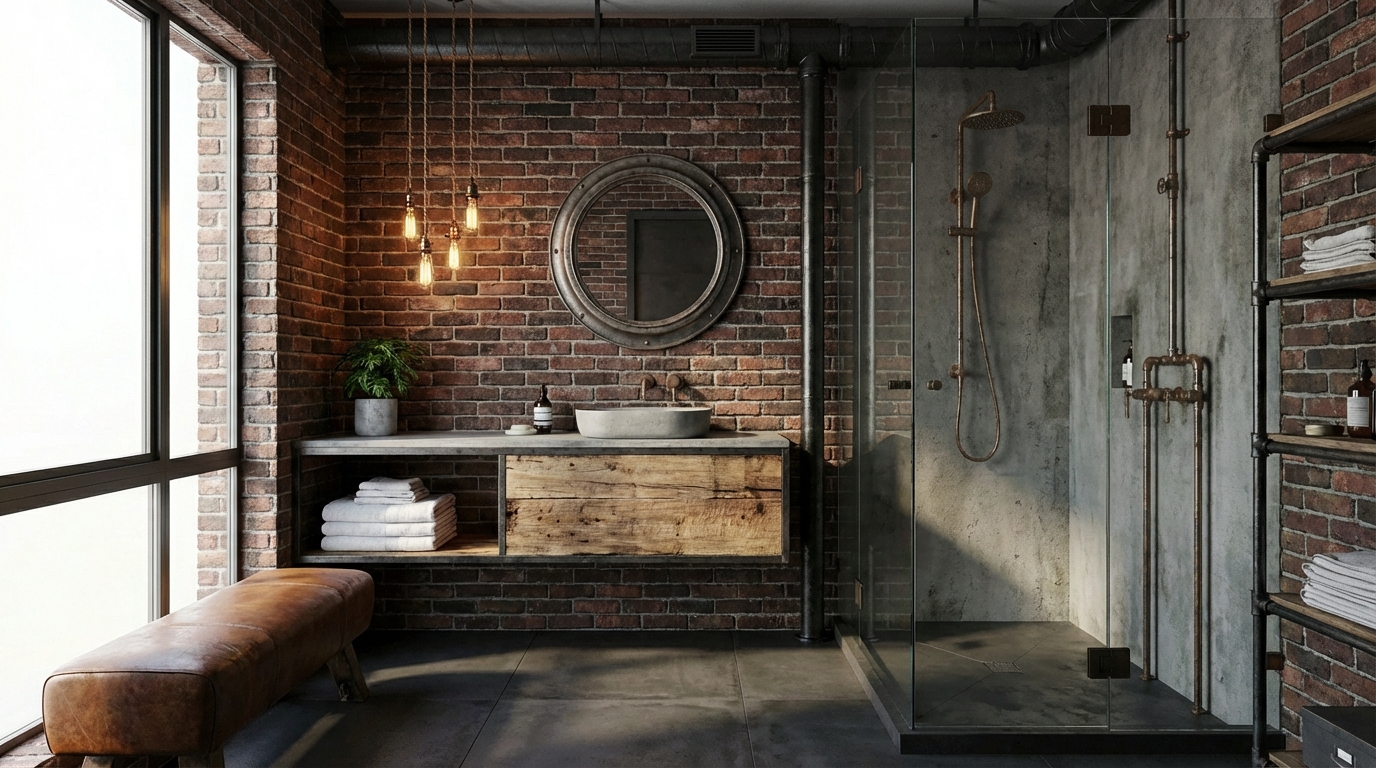
Exposed brick, steel beams, and raw concrete — industrial design turns the bones of a building into its most striking features.
$$
See the Transformation
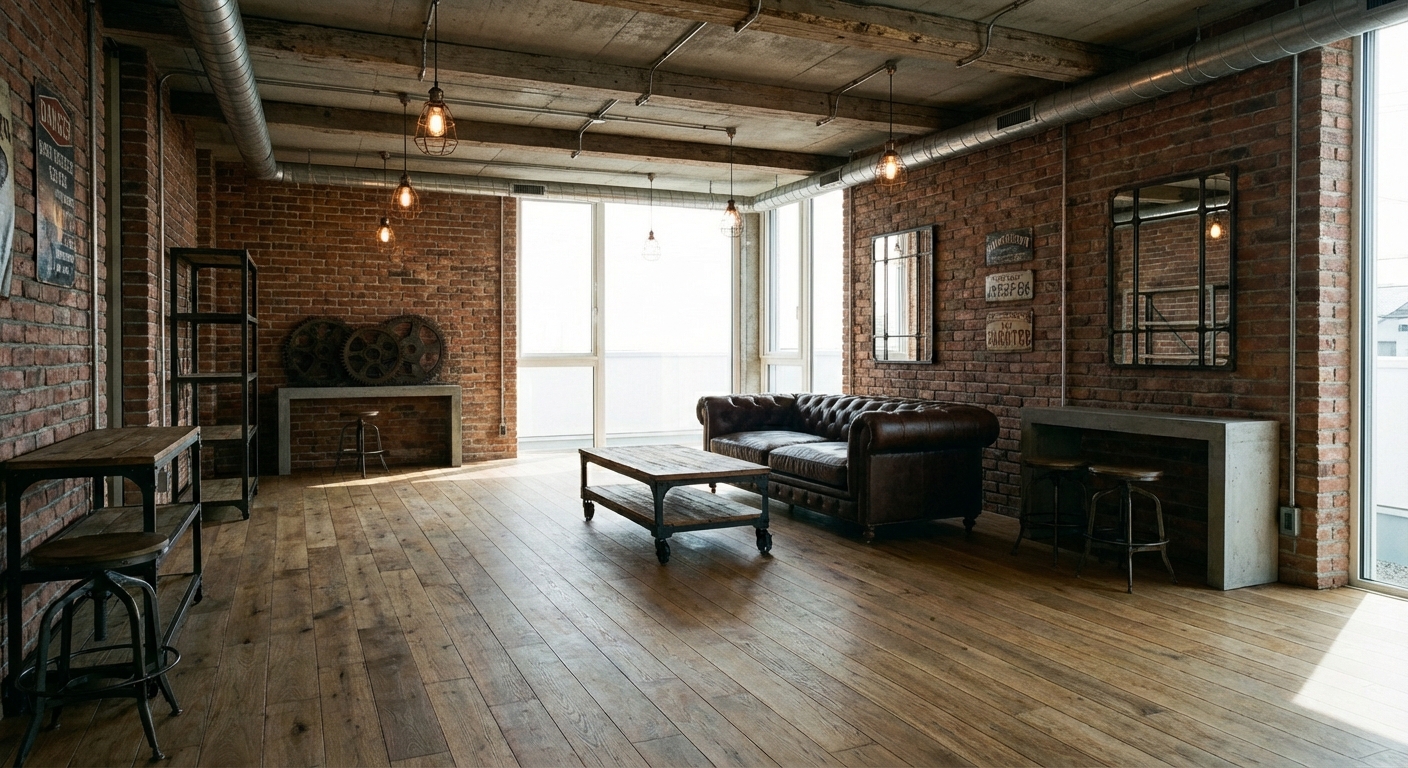
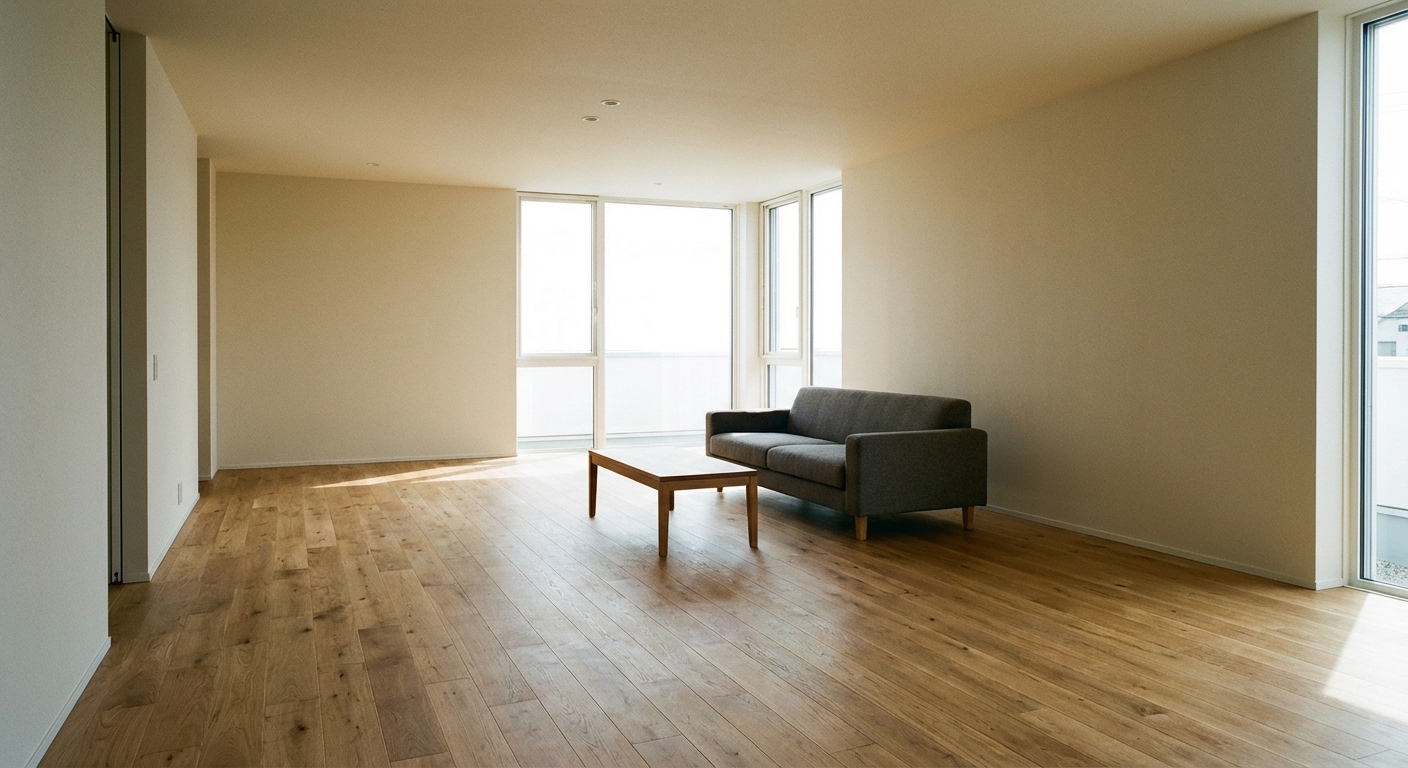
Upload your room photo in the app to see your real transformation
Color Palette
Why It Works
Industrial design emerged organically in the 1960s and 70s when artists and creatives began converting abandoned factories and warehouses in Manhattan and London into living spaces. Rather than covering the raw infrastructure — exposed brick, steel beams, concrete floors, visible ductwork — they celebrated it. This accidental aesthetic became a deliberate design movement. The philosophy is rooted in honesty: instead of hiding a building structure behind drywall and crown molding, industrial design makes the structure the feature. The appeal is both visual and psychological. High ceilings and open plans create a sense of freedom. Raw materials carry the weight of history — every scratch in the concrete, every patina on the steel tells a story. The neutral, textured backdrop of industrial spaces serves as a perfect canvas for both art and everyday living, which is why the style translates so well from lofts to restaurants to modern homes.
How to Achieve This Look
- 1
Expose or faux-finish one brick or concrete wall
- 2
Choose furniture with visible metal frames and raw wood tops
- 3
Install Edison-style pendant lights or cage fixtures
- 4
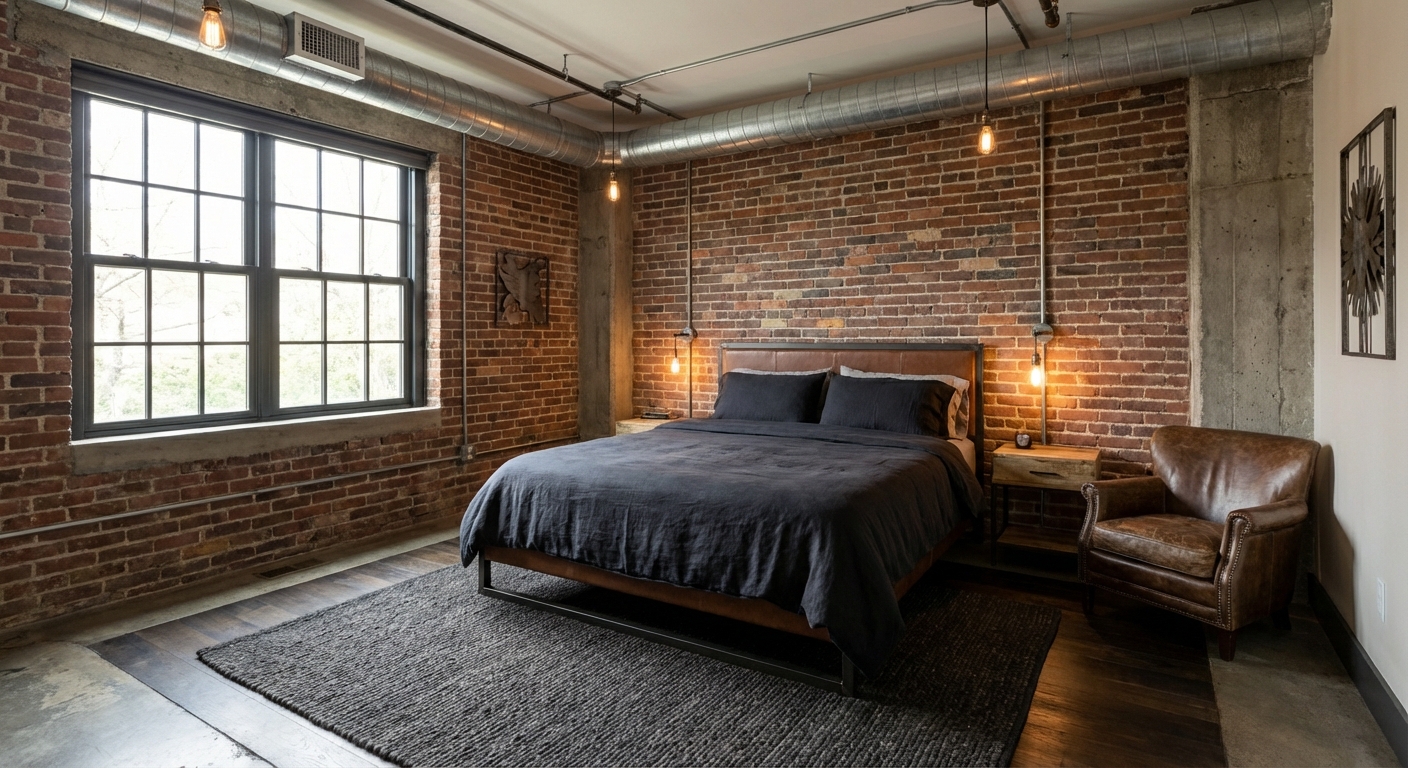
Add leather seating for warmth against hard surfaces
- 5
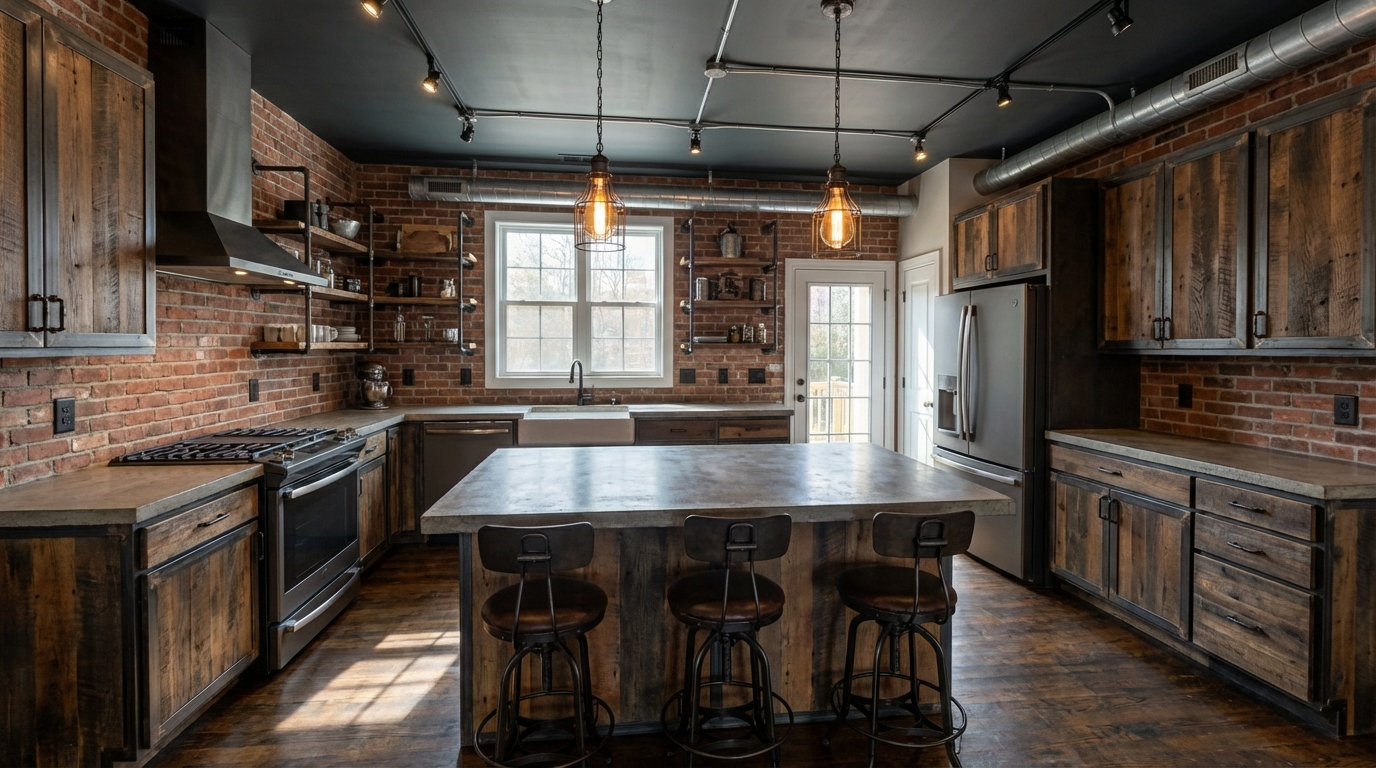
Use open metal shelving instead of closed cabinets
- 6
Incorporate vintage factory items as functional decor
Balance every hard surface with something soft — a leather sofa against exposed brick, or a plush rug under a metal table.
Try It with AI
Industrial design requires careful balance — too raw feels cold, too polished loses authenticity. Layoutly AI lets you upload your room and test different levels of industrial styling, from a few accent pieces to a full loft conversion. See how exposed brick, metal fixtures, and concrete elements would look in your actual space before committing to irreversible changes.
How They Compare
Frequently Asked Questions
Can I achieve industrial design without exposed brick?
Absolutely. Brick-slip panels, concrete-effect paint, metal shelving, Edison bulb lighting, and leather furniture can create an industrial feel in any room. The style is as much about material choices and color palette as it is about architectural features.
How do I make industrial design feel warm?
Layer in warm materials: leather seating, reclaimed wood surfaces, vintage rugs, and warm-toned metals like brass and copper. Use warm-temperature lighting (2700K bulbs) and add plants to soften hard edges. The combination of raw and warm materials is what makes industrial design livable.
What rooms work best for industrial design?
Kitchens, living rooms, and home offices are the most natural fit. Industrial kitchens with open shelving and stainless steel are highly functional. Bedrooms and bathrooms can work with a softer industrial approach — think concrete-effect tiles and metal accents rather than full raw exposure.
Is industrial design expensive?
It can be budget-friendly because the aesthetic embraces imperfection. Thrift stores, salvage yards, and flea markets are excellent sources. DIY projects like pipe shelving, concrete planters, and painted brick walls keep costs low. The most expensive element is typically flooring if you want genuine polished concrete.
Ready to Transform Your Room?
Download Layoutly and see this design in your space in seconds.