The Complete Guide to Art Deco Interior Design
Bold geometry, luxurious materials, and unapologetic glamour — Art Deco is the design style that treats every room like a celebration.
$$$
See the Transformation
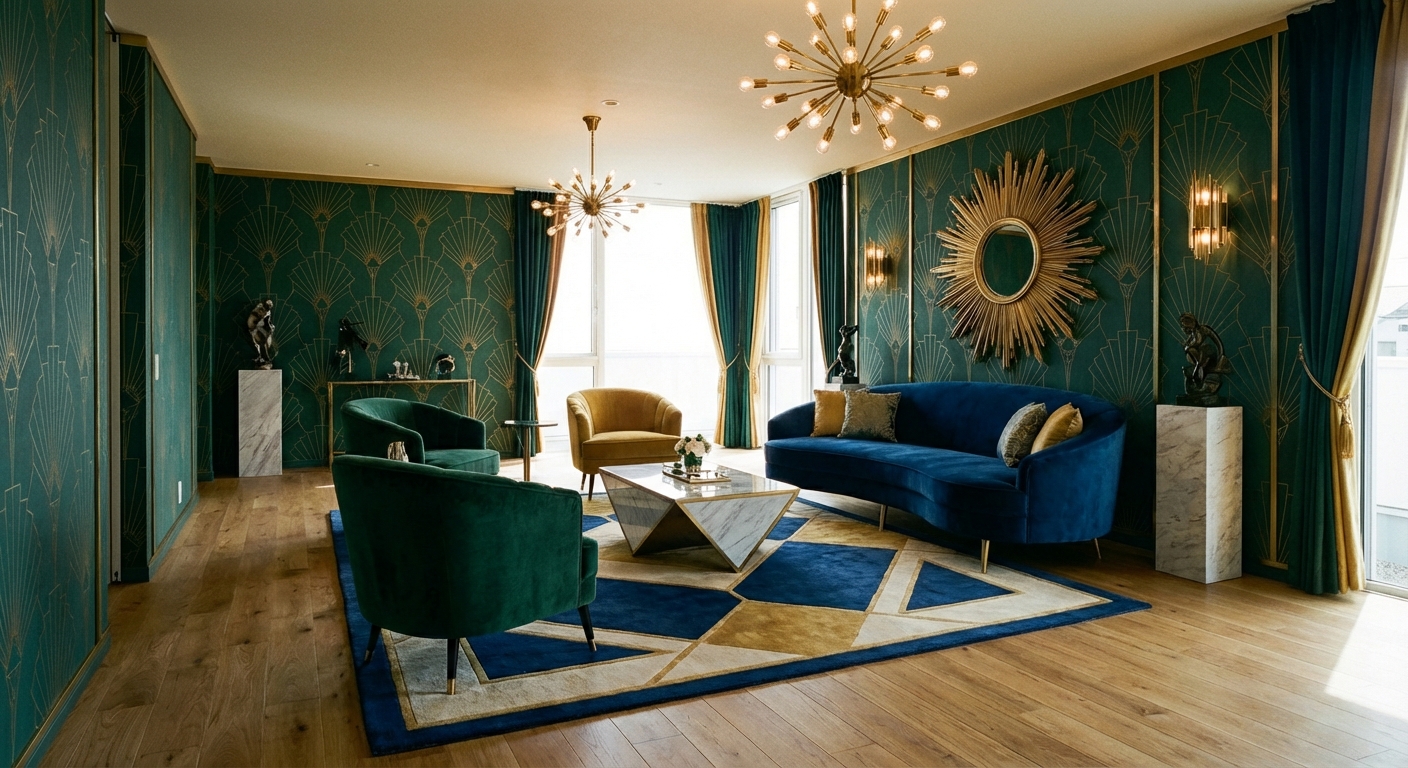
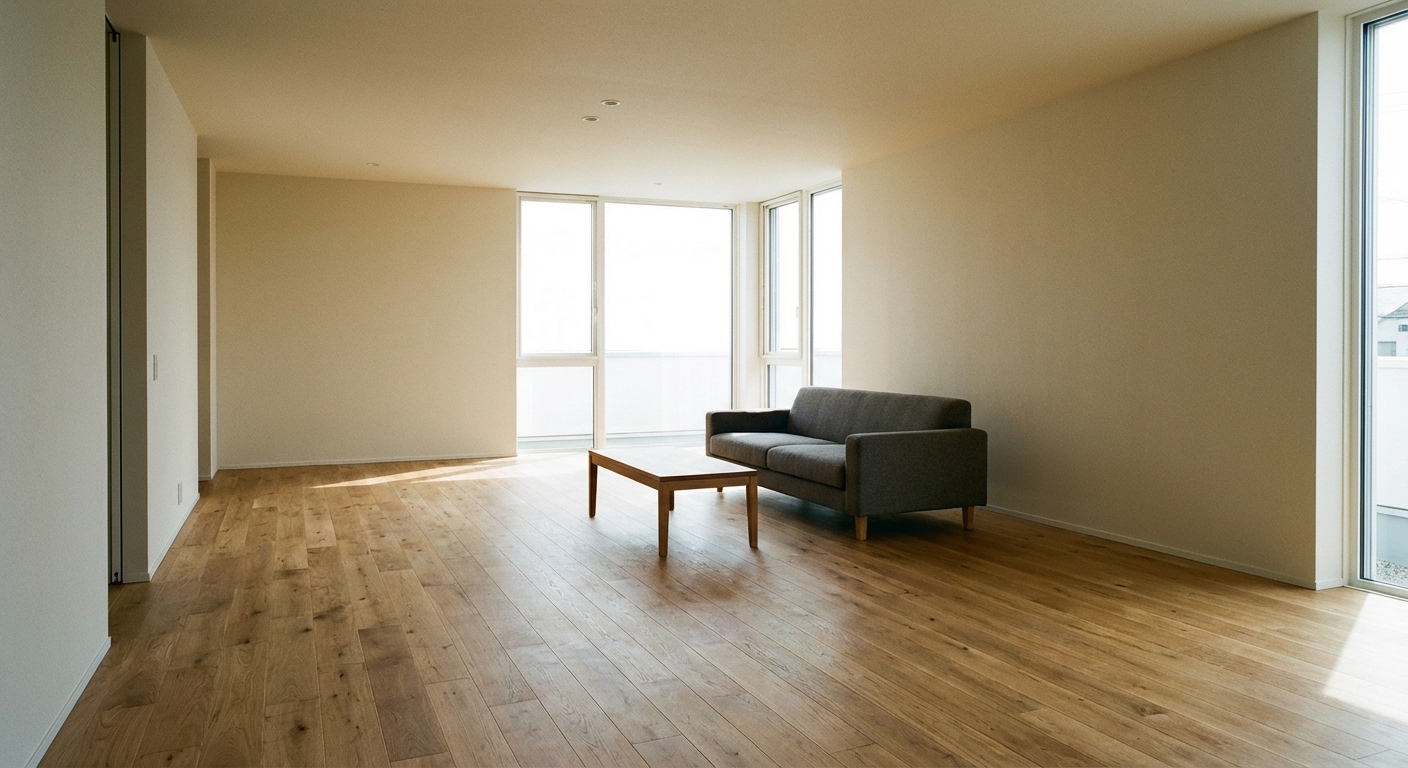
Upload your room photo in the app to see your real transformation
Color Palette
Why It Works
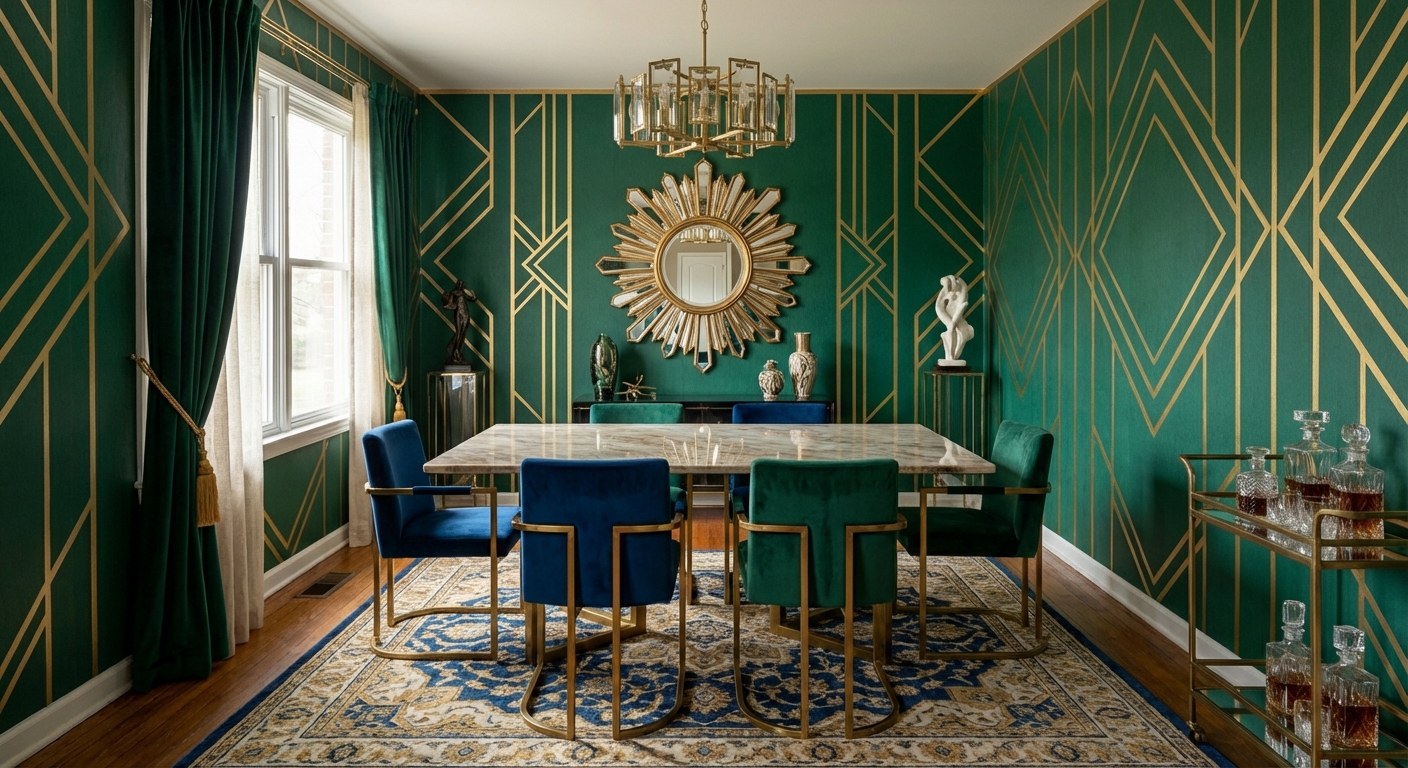
Art Deco exploded onto the world stage at the 1925 Exposition Internationale des Arts Decoratifs in Paris, giving the movement its name. It was a celebration of modernity, technology, and prosperity — a visual language of optimism forged between two world wars. The style drew from diverse influences: Egyptian archaeology (the 1922 discovery of Tutankhamun tomb), Cubist art, Bauhaus geometry, and machine-age aesthetics. Unlike the sinuous curves of Art Nouveau that preceded it, Art Deco embraced sharp geometric forms — chevrons, sunbursts, zigzags, and stepped patterns. Luxury was central: exotic materials like shagreen, lacquer, ivory, and chrome communicated wealth and sophistication. Art Deco endures because its combination of geometric precision and sensual luxury creates an unmistakable drama. Every Art Deco room makes a statement. In an era of Instagram-ready interiors, its photogenic boldness resonates with a new generation seeking spaces with personality.
How to Achieve This Look
- 1
Choose a rich, dark wall color — navy, emerald, or charcoal
- 2
Add furniture with geometric shapes and gold or brass hardware
- 3
Upholster key pieces in velvet or rich jewel-toned fabric
- 4
Install a dramatic chandelier or geometric light fixture
- 5
Use lacquered or mirrored surfaces for glamorous reflections
- 6
Layer in geometric patterns through rugs, pillows, and art
Go bold on one statement piece — a sunburst mirror, a velvet sofa, or a geometric bar cart — and let the rest of the room support it.
Try It with AI
Art Deco is a high-commitment style — the bold patterns and luxury materials can overwhelm if not balanced correctly. Layoutly AI lets you preview Art Deco elements in your room before investing in velvet furniture, geometric wallpaper, or gold fixtures. See how the glamour level looks in your actual space and adjust until the drama feels right.
How They Compare
Frequently Asked Questions
Is Art Deco too over-the-top for modern homes?
Not if you use it selectively. A full Art Deco room is bold, but individual elements — a geometric mirror, a velvet armchair, gold hardware — add glamour to any contemporary space. Many designers use Art Deco as an accent layer within a more neutral modern foundation.
What are the signature Art Deco patterns?
Sunbursts and fan shapes, chevrons and zigzags, stepped geometric forms, and symmetrical tessellations. These patterns appear in everything from mirrors and lighting to textiles and wallpaper. The key is geometric precision and bold repetition.
How do I add Art Deco touches on a budget?
Start with accessories: a geometric mirror, gold-framed art prints, velvet cushions in jewel tones, and a bold Art Deco-patterned rug or wallpaper accent wall. Brass or gold hardware swaps on existing furniture can also shift the aesthetic significantly.
What rooms suit Art Deco best?
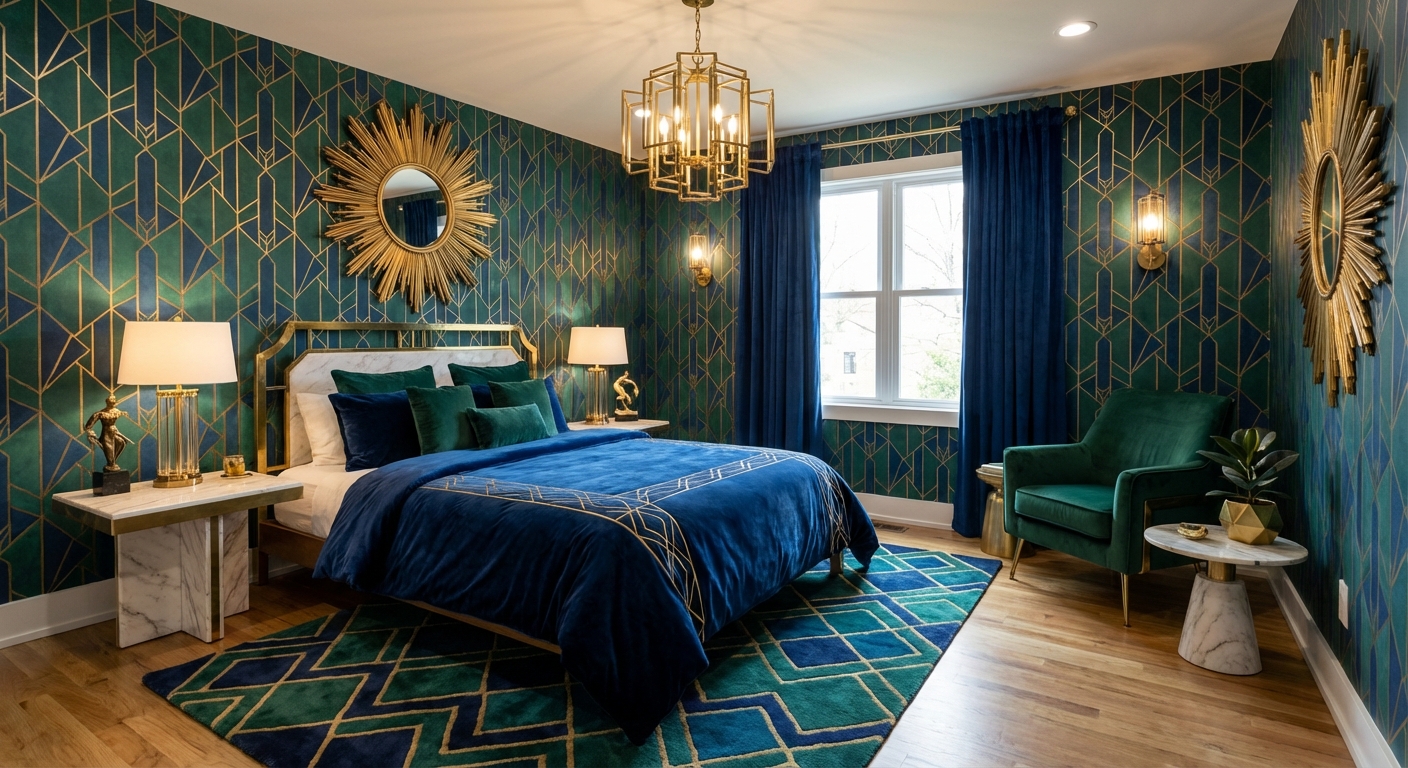
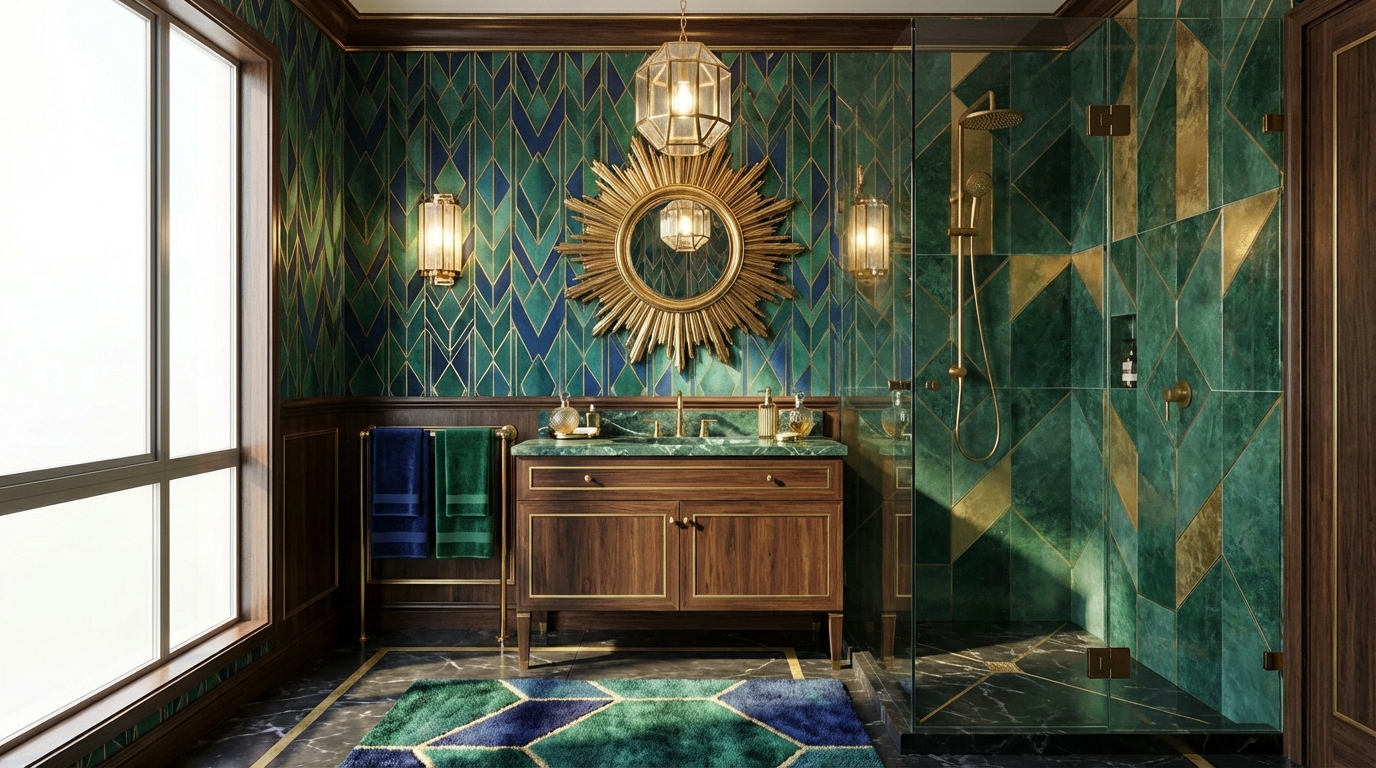
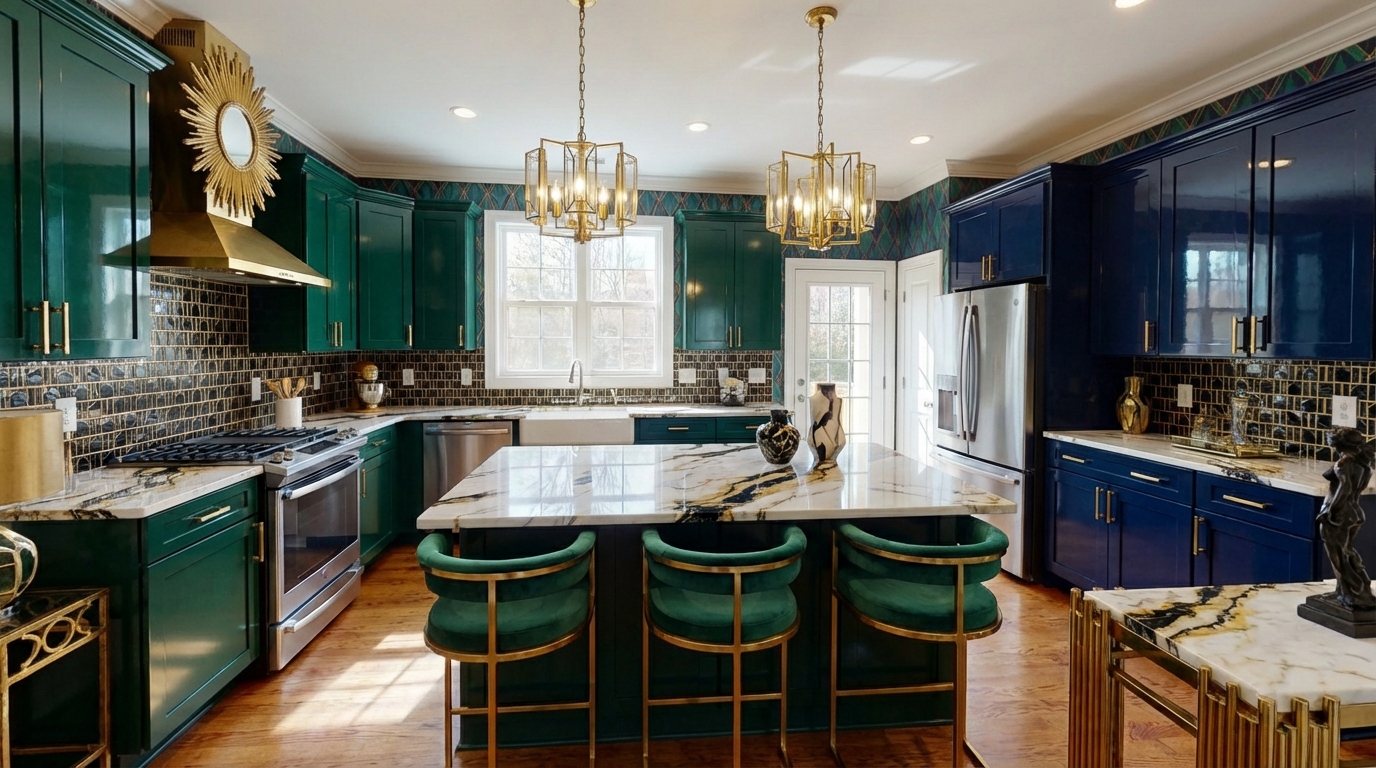
Living rooms, dining rooms, and bathrooms are natural fits — these are spaces where drama and luxury enhance the experience. Bedrooms can work with a softer Art Deco approach. Kitchens are the most challenging, though geometric tile and brass fixtures can introduce the style subtly.
Ready to Transform Your Room?
Download Layoutly and see this design in your space in seconds.